
Industry News

Home / News / Industry News
  • How to Choose an Axial Fan for a Small Workshop: CFM Sizing, Static Pressure and Safety

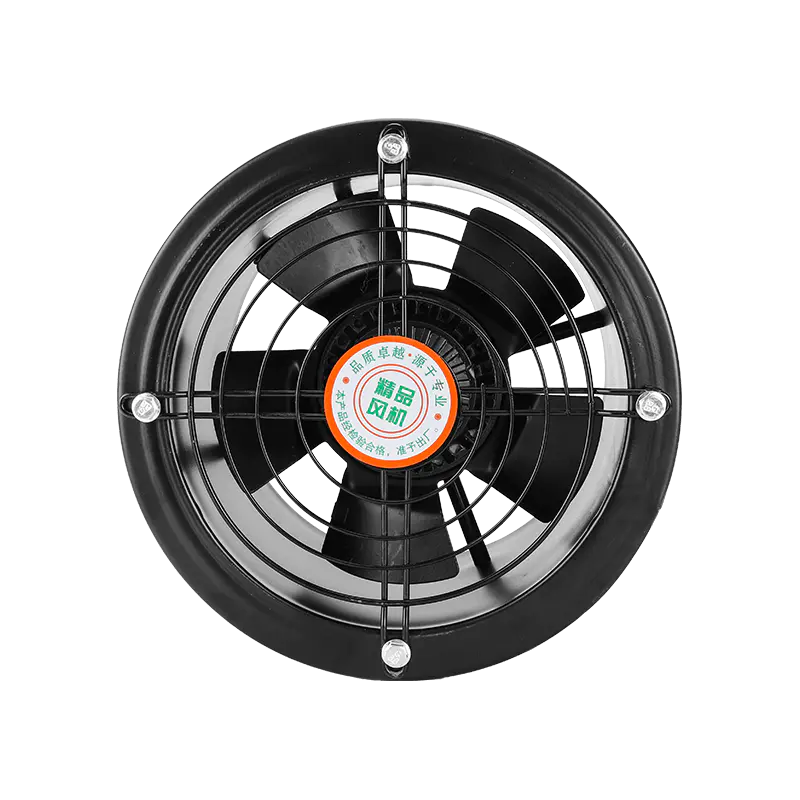
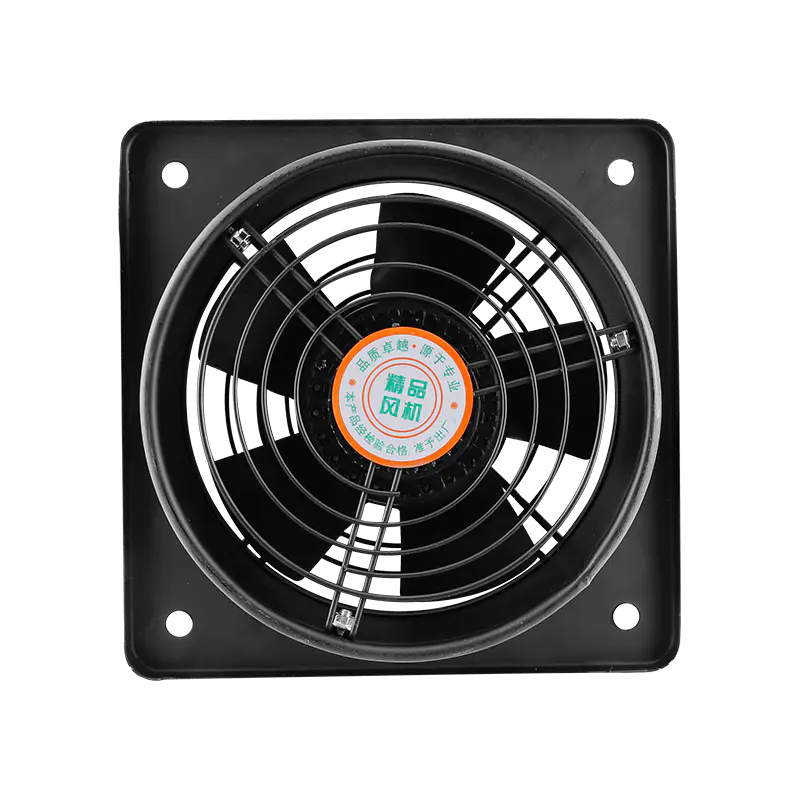
    Introduction Size an axial fan for a small workshop with CFM calculations, static pressure checks, model comparisons and dust and fume guidance from ZIFENG FAN. Details For a small workshop needing general air exchange or heat removal, a wall-mounted axial exhaust arrangement is a practical starting point when airflow resistance is low. Choose the fan by the airflow it delivers at your actual system pressure, then check electrical supply, noise and installation. Welding fumes, wood dust and fla...

    2026-10-27
  • Forward Curved vs Backward Curved Centrifugal Fans: 7 Key Differences and How to Choose

    The 30-Second Answer If you only have half a minute: Forward curved (FC) fans have blades that curve into the direction of rotation. Many shallow blades, low speed, compact, low purchase price. Built for high airflow at low static pressure with clean air — AHUs, fan coil units, commercial ventilation. Efficiency: 60–72%. Backward curved (BC) fans have blades that lean away from the direction of rotation. Fewer, wider blades, higher speed, high efficiency, and — critically — a non-overloading po...

    2026-10-23

  • CF-11 Low-Noise Kitchen Exhaust Fan: Specs & dB(A)

    Quick Answer The CF-11 is a low-noise multi-wing centrifugal fan for commercial kitchen grease exhaust and ventilation in canteens, restaurants, hotels and other public spaces. It covers 700–21,000 m³/h at up to 1,600 Pa total pressure, and every configuration carries a published sound level of ≤65–82 dB(A). What Is the CF-11 Low-Noise Multi-Wing Centrifugal Fan? The CF-11 was developed to meet two pressures that arrived together: the growth of the air purification industry and tightening enviro...

    2026-10-20

  • 4-72A Centrifugal Fan :Advantages and applicable scenarios

    Quick Answer The 4-72A centrifugal fan is an A-type direct-drive ventilator: the impeller sits on the motor shaft, with no belts and no coupling. Benefits: highest transmission efficiency, compact layout, low vibration, minimal drive maintenance. It handles non-flammable, non-toxic, non-corrosive gases up to 80°C with dust not exceeding 150 mg/m³. What Is the 4-72A Centrifugal Fan? In the 4-72 code, "4" is the pressure coefficient and "72" the specific speed — moderate total pressure, high airfl...

    2026-10-16

  • ID Fan vs. FD Fan in Boiler Systems: What's the Difference and How to Choose

    If you have ever asked a boiler supplier for "two fans" and got a quote back where one of them was roughly the same physical size as the other, the supplier was guessing. The FD fan (forced-draft, blowing air into the furnace) and the ID fan (induced-draft, pulling flue gas out) handle two completely different duties, and the ID fan is almost always the larger, more expensive and more carefully specified of the two. This article is the engineering version of that observation. It is written for t...

    2026-10-14

  • 4-72 vs 9-19 vs 9-26: Which Standard Fan Model Fits Your Duty?

    You sent the same duty point — say 6,000 m³/h at 2,800 Pa — to three Chinese suppliers. One quotes a 4-72, one quotes a 9-19, one quotes a 9-26. The prices differ by more than double. Nobody explains why. They are not quoting the same machine, and they are not all right. These three model numbers are the backbone of the Chinese centrifugal fan industry: they are standardised, they are stocked everywhere, and they cover almost every ordinary industrial duty. But each one lives in a different corn...

    2026-10-08

  • How to Select an Industrial Centrifugal Fan: Airflow, Static Pressure & Motor Sizing

    Here is something we see almost every day. An inquiry arrives that says only:"Need one centrifugal fan, model 4-72, 5.5 kW."No airflow. No pressure. No gas temperature. Nine times out of ten, the fan that gets shipped will either be oversized and waste power, or undersized and never reach the airflow the customer actually needs. A centrifugal fan is not bought by model number — it is bought by a duty point. This guide walks through the five steps our application engineers use, and finishes with ...

    2026-10-06

  • Centrifugal fan for kitchen exhaust

    Centrifugal fansTools also assist in maintaining a kitchen clean smelling and feel. These fans work by rotating a series of blades that draw air outward. This centrifugal fan for kitchen exhaust of course provides a draft, allowing for air to be sucked from your kitchen (or other living area) into the stove. In this process the air that moves is what takes away smoke, steam and cooking odors which you not want in your house. This Zifeng Fan is so important because if you have a space that feels ...

    2026-09-30

  • Centrifugal fans:uses and applicaions

    Introduction This article takes an in-depth look at centrifugal blowers. You will learn: How Centrifugal Blowers are Used How Centrifugal Blowers Work And much more… Chapter One - How Centrifugal Blowers Work? Centrifugal blowers are widely favored for both industrial and commercial air movement needs due to their straightforward design, high durability, and reliability. This type of industrial fan is engineered for exceptional performance in a variety of demanding environments, making centrif...

    2026-09-28

Submit feedback