 English
 عربى
عربى
844–305134-72A airflow range (m³/h)
198–31874-72A total pressure (Pa)
305–4500DF airflow range (m³/h)
72–86DF noise range (dB(A))
Both centrifugal, but aimed differently
Both draw air in at the center and discharge it at roughly a 90° turn after the impeller adds energy. The difference lies in the blade profile and the duty they target. The 4-72A uses backward-curved blades for stronger efficiency and stability, common in industrial ventilation, dust collection, and AHU supply. The DF uses a forward multi-blade impeller that runs slower and quieter, common in noise-sensitive clean and comfort applications.
4- 72A
General, efficient, industrial
Backward impeller plus direct drive — focused on efficiency, durability, and duty range; suited to factories, dust collection, and AHU supply.
DF
Low-noise, clean, comfort
Forward multi-blade impeller, lower speed, lower noise — focused on quiet and compact duty; suited to HVAC, clean rooms, labs.
Model 1
4-72A Centrifugal Fan
A general-purpose centrifugal fan series; "A" denotes direct motor coupling.
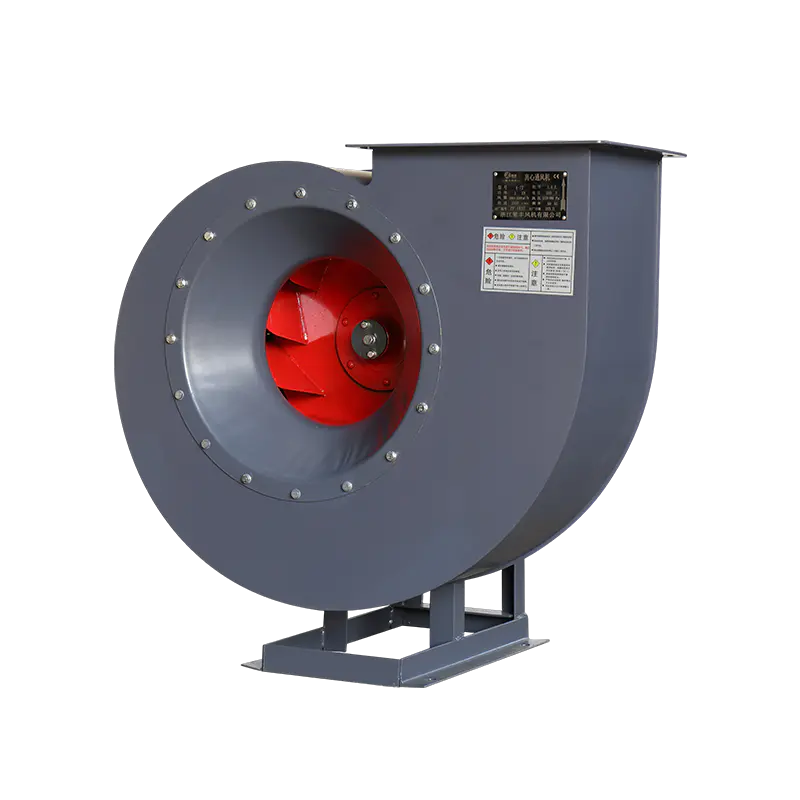
Design highlightsOverview
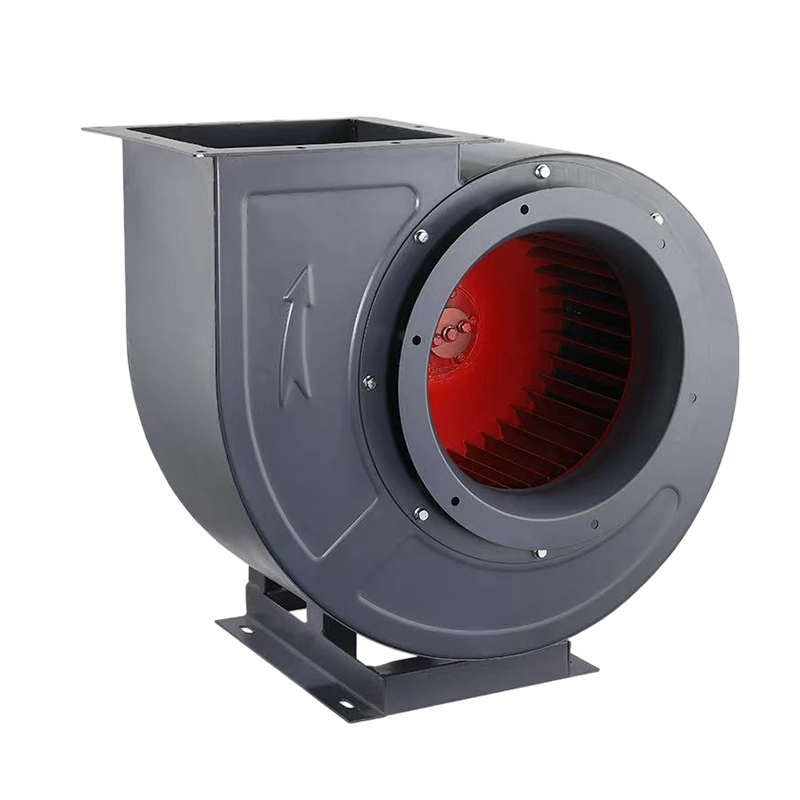
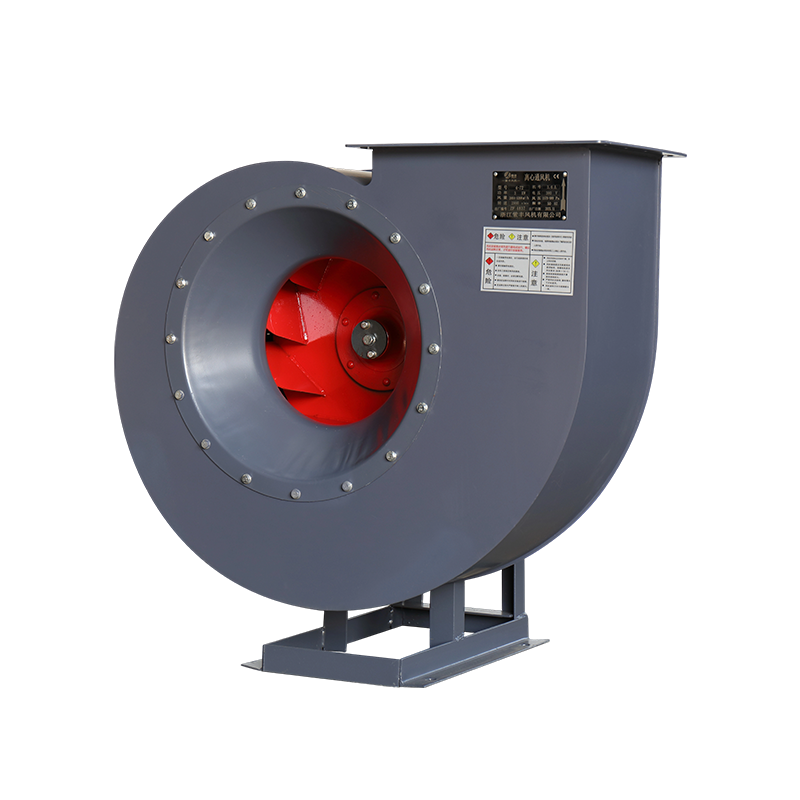
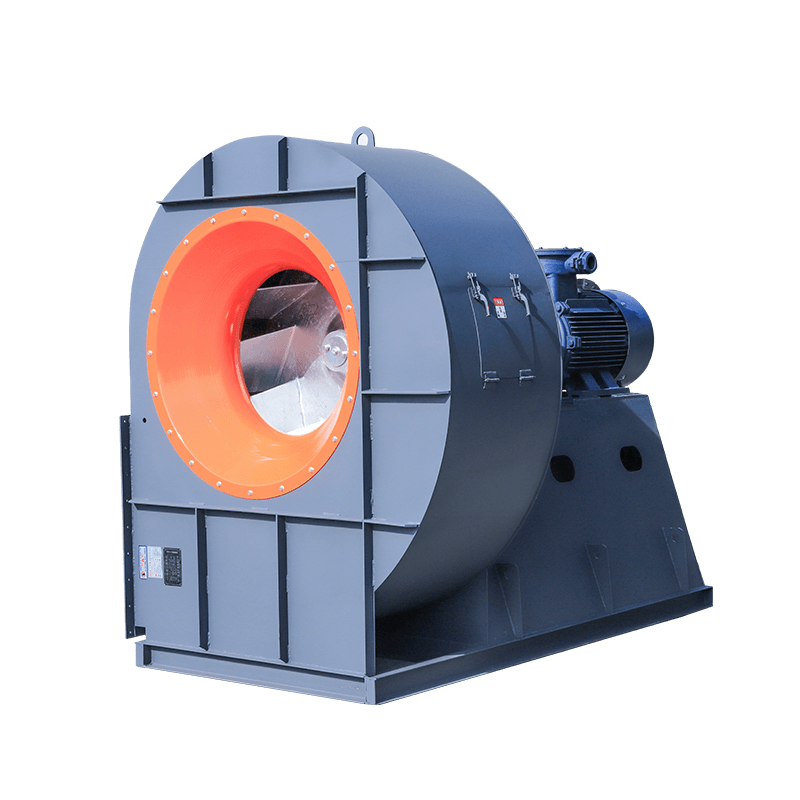
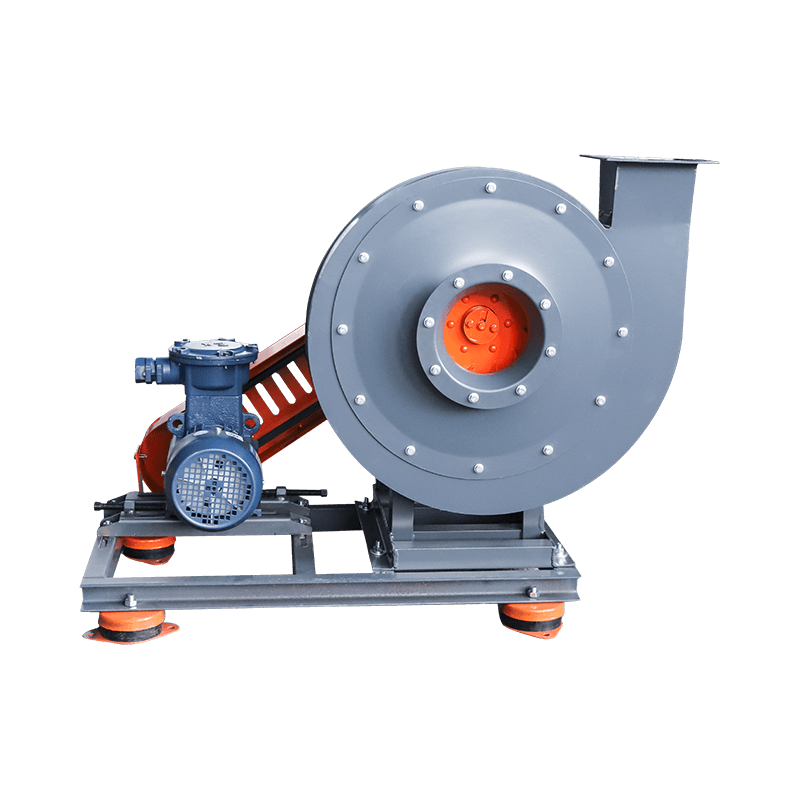
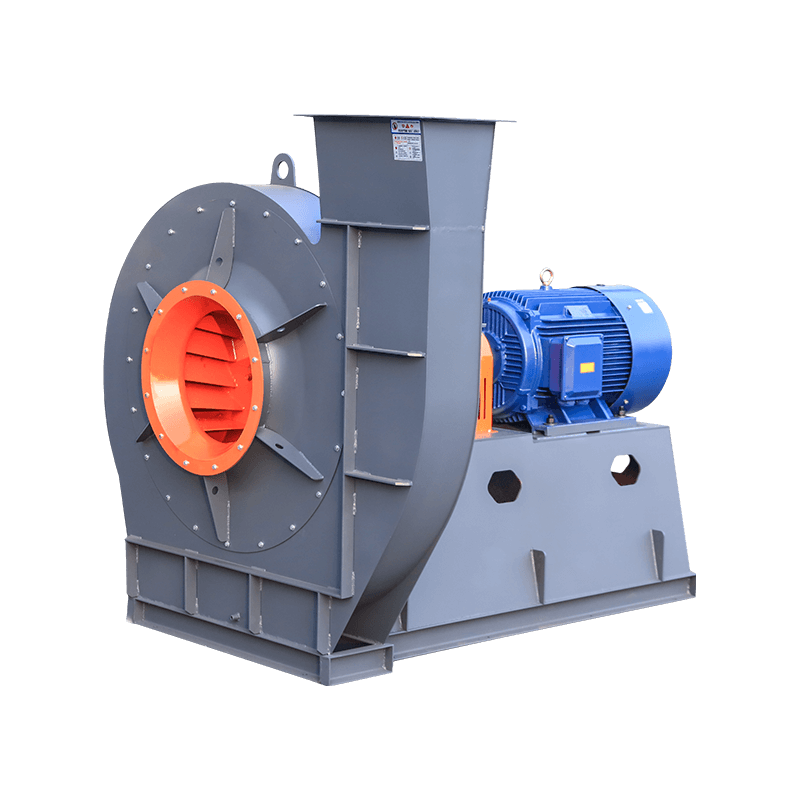
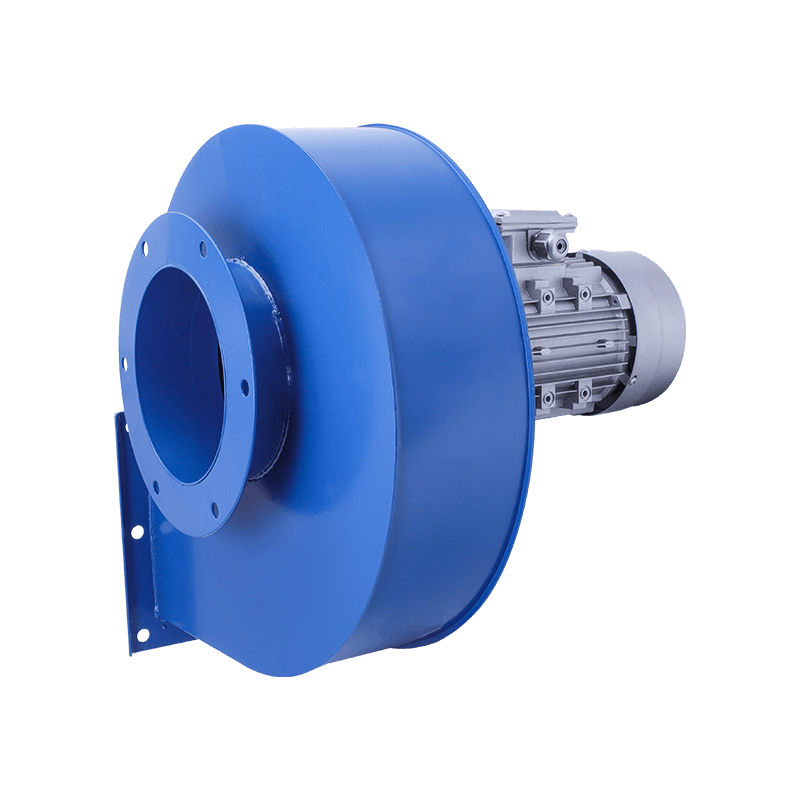
The 4-72 is a general-purpose centrifugal fan series. The "A" means the drive is direct motor coupling — the impeller mounts straight on the motor shaft with no separate bearing pedestal. The impeller typically uses backward-inclined / backward-curved blades, giving good aerodynamic efficiency and stable operation, inside a scroll (volute) casing with single inlet. As shown above, the unit consists of the scroll casing, inlet ring, impeller, and base frame — a simple structure that is easy to install and service.
The series covers 16 size–motor combinations from 2.8A to 7.1A with 1.1–15 kW two-/four-/six-pole motors: airflow of roughly 844–30513 m³/h and total pressure of roughly 198–3187 Pa. Two-pole options deliver higher volume and pressure (e.g. size 5A with a 15 kW two-pole motor reaches 7728–15445 m³/h at 3187–2019 Pa), while four-/six-pole options run slower with less noise and wear (e.g. size 6A with a 1.5 kW six-pole motor gives 4420–8641 m³/h at 498–317 Pa). See the full table below.
Pros Strengths
1 Higher efficiency, lower energy use over long running hours
2 Backward impeller has a non-overloading characteristic — the motor is less likely to overload when system resistance changes
3 Direct drive: compact, no belt loss, fewer maintenance points
4 Rugged and durable, suited to continuous operation
5 Broader medium range — from clean air to lightly dusty duty (by blade type and protection)
Cons & cautions Limits
1 Direct-drive speed is set by motor poles; speed change is harder without a VFD / inverter-duty motor
2 Motor and impeller share the shaft and sit in the airstream; for hot or corrosive gas, choose heat/corrosion-resistant builds or another drive (e.g. coupled "D" type)
3 Noise is not the lowest; silencers and isolation are needed in noise-sensitive spots
4 Larger footprint than multi-blade fans; needs more installation space
5 Higher manufacturing precision, typically priced above simple forward-curved fans
Typical applications Duty
Factory ventilation, building supply/exhaust, dust collection systems, AHU supply, boiler-room ventilation (temperature and pressure depend on model and material).
Main technical parameters 4-72A
| Model (size) | Motor power (kW)–poles | Air volume (m³/h) | Total pressure (Pa) |
|---|---|---|---|
| 2.8A | 1.5-2 | 1131–2356 | 994–606 |
| 3.2A | 2.2-2 | 1688–3517 | 1300–792 |
| 3.2A | 1.1-4 | 844–1758 | 324–198 |
| 3.6A | 3-2 | 2664–5268 | 1578–989 |
| 3.6A | 1.1-4 | 1332–2634 | 350–247 |
| 4A | 5.5-2 | 4012–7419 | 2014–1320 |
| 4A | 1.1-4 | 2006–3709 | 501–329 |
| 4.5A | 7.5-2 | 5712–10562 | 2554–1673 |
| 4.5A | 1.1-4 | 2856–5281 | 634–416 |
| 5A | 15-2 | 7728–15445 | 3187–2019 |
| 5A | 2.2-4 | 3864–7728 | 790–502 |
| 5.6A | 3-4 | 7062–9885 | 957–759 |
| 6A | 4-4 | 6677–13353 | 1339–724 |
| 6A | 1.5-6 | 4420–8641 | 498–317 |
| 6.3A | 7.5-4 | 7729–15485 | 1256–789 |
| 7.1A | 11-4 | 12676–30513 | 1573–1168 |
Note: each size accepts motors with different pole counts — 2-pole for higher speed, volume, and pressure; 4-/6-pole for lower speed and smoother, quieter running. Values are typical performance ranges at standard conditions and shift with duty; selection should follow ZIFENG's tested performance curves.
Model 2
DF Low-Noise Centrifugal Fan
A centrifugal series aimed at quiet duty, usually with a forward multi-blade impeller.
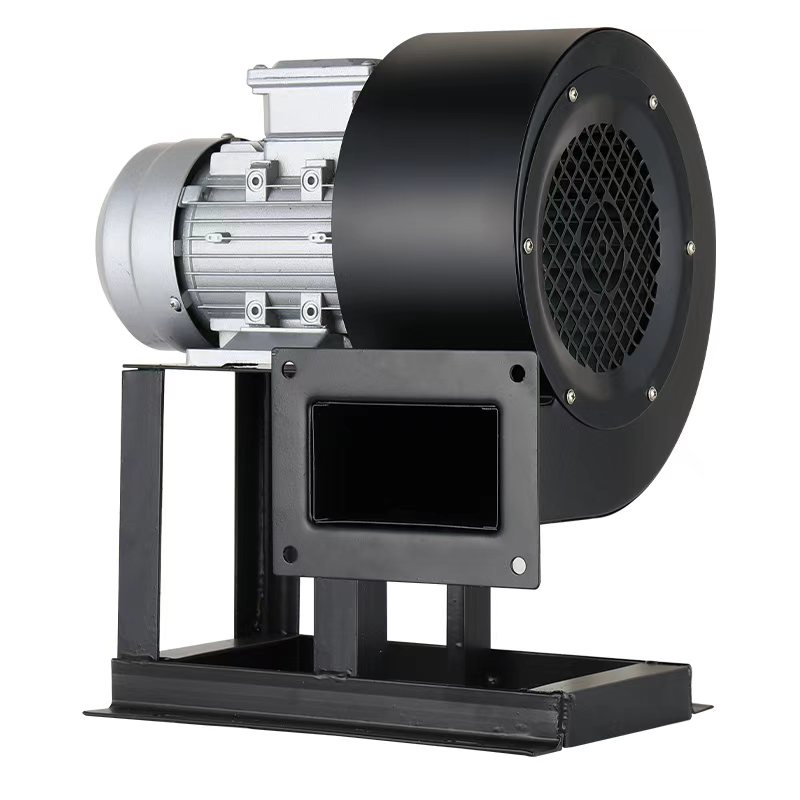
Design highlights Overview
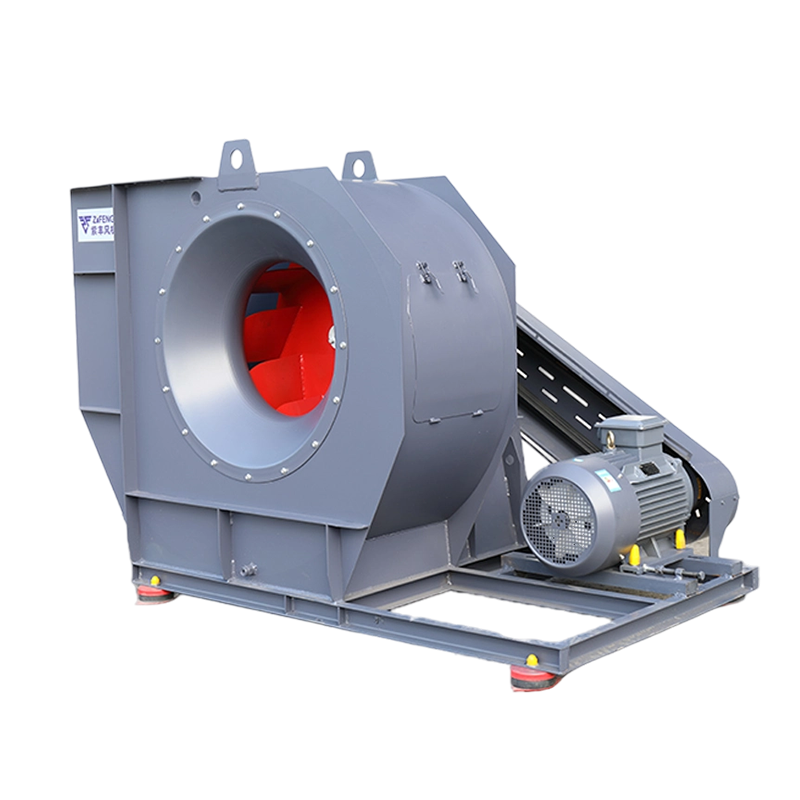
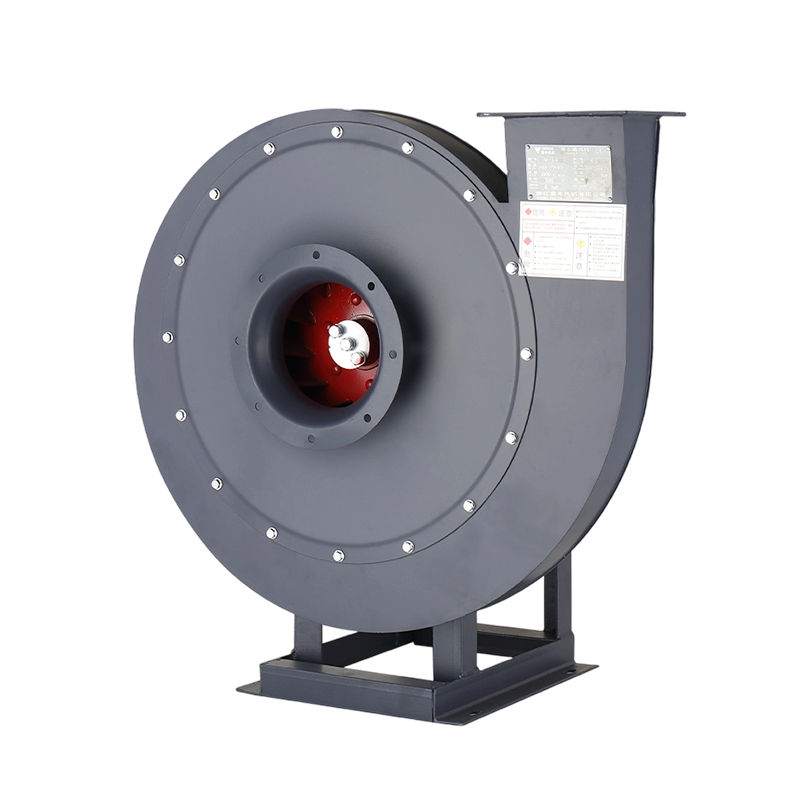
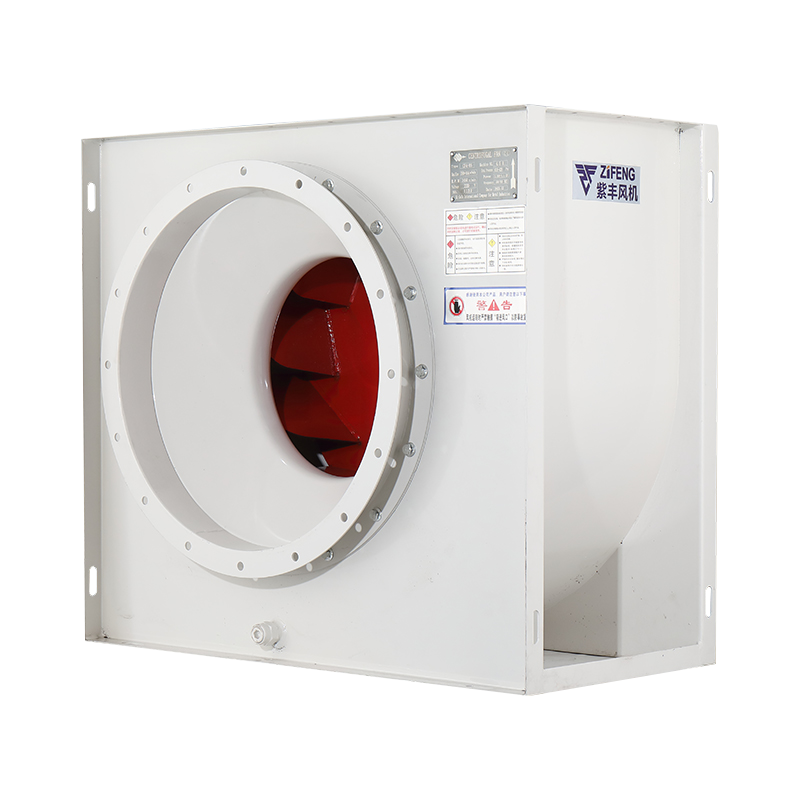
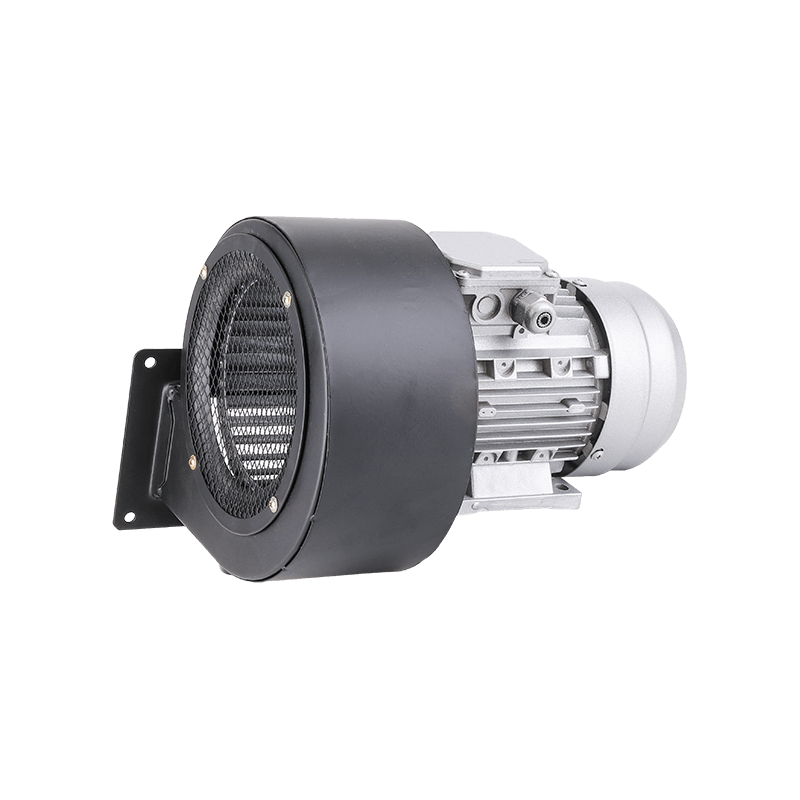
The DF is a low-noise centrifugal fan series. The impeller usually uses a forward multi-blade (sirocco) profile, designed for noise-sensitive clean and comfort duty. As shown above, the motor sits outside the airstream and drives the impeller inside the scroll casing directly, with a square outlet and a one-piece base frame for a small installation footprint. Many blades and a relatively low speed (typically 2800 r/min) give smooth, steady airflow.
The series covers 9 models from DF-1.3 to DF-2.5, with motor power of 120–2200 W at 220/380 V: airflow of roughly 305–4500 m³/h, total pressure of roughly 412–1470 Pa, and noise of roughly 72–86 dB(A). Small models (e.g. DF-1.3-I, 120 W) deliver 305 m³/h at about 72 dB(A) — suited to terminal supply air — while larger models (e.g. DF-2.5, 2200 W) reach 3500–4500 m³/h at 1470–1300 Pa for slightly larger systems. See the full table below.
Pros Strengths
1 Lower noise, suited to offices, labs, hospitals, clean rooms and other quiet-required spaces
2 Compact, small, light — easy to embed in AHUs and purification equipment
3 Low-speed operation, low vibration
4 Gentle pressure-flow curve, easier to match in small systems
5 Typically lower manufacturing cost than high-efficiency backward impellers
Cons & cautions Limits
1 Lower efficiency (forward multi-blade about 55–70%); higher energy use in long, high-volume duty
2 Not for dusty, sticky, or abrasive media — blades collect dust and clog
3 Overload characteristic risk: power rises if system resistance drops, so motor and control selection need care
4 Limited pressure capability; not suited to long ducts or dense filters (high-resistance systems)
5 Aimed at clean comfort duty; weaker fit for heavy industrial duty
Typical applications Duty
Commercial HVAC, clean workshops, lab ventilation, hospital and office ventilation, and purification-equipment supply where noise matters.
Main technical parameters DF
| Model | Power (W) | Speed (r/min) | Voltage (V) | Air volume (m³/h | Total pressure (Pa) | Noise (dB(A)) |
|---|---|---|---|---|---|---|
| DF-1.3-I | 120 | 2800 | 220/380 | 305 | 412 | 72 |
| DF-1.3-II | 180 | 2800 | 220/380 | 405 | 450 | 75 |
| DF-1.6-I | 250 | 2800 | 220/380 | 504 | 560 | 75 |
| DF-1.6-II | 370 | 2800 | 220/380 | 660 | 850 | 76 |
| DF-2-I | 550 | 2800 | 220/380 | 860 | 1020 | 76 |
| DF-2-II | 750 | 2800 | 220/380 | 1200 | 1210 | 80 |
| DF-2-III | 1100 | 2800 | 220/380 | 2100–2900 | 1260–1050 | 82 |
| DF-2.3-II | 1500 | 2800 | 220/380 | 2600–3500 | 1360–1220 | 86 |
| DF-2.5 | 2200 | 2800 | 380 | 3500–4500 | 1470–1300 | 84 |
Note: values are typical figures at standard conditions; the actual operating point moves along the fan curve as duct resistance changes. Noise is a laboratory A-weighted reading and varies on site with installation and reflections. Selection should follow ZIFENG's tested performance curves and contract documents.
Side by side
The comparison at a glance
Built on the two parameter tables above — ranges cover each whole series; individual models follow the tables.
| Dimension | 4-72A | DF |
|---|---|---|
| Positioning | General, efficient, industrial | Low-noise, clean, comfort |
| Impeller | Backward blades | Forward multi-blade |
| Drive | A direct-coupled | Mostly direct / external-rotor |
| Airflow range | 844–30513 m³/h (2.8A–7.1A) | 305–4500 m³/h (DF-1.3–2.5) |
| Pressure range | 198–3187 Pa | 412–1470 Pa |
| Power range | 1.1–15 kW (2/4/6-pole) | 120–2200 W (2800 r/min) |
| Efficiency | Higher (about 80%+) | Lower (about 55–70%) |
| Noise | Moderate; silencers if needed | About 72–86 dB(A), lower |
| Medium | Clean to lightly dusty | Clean air only |
| Size / space | Larger | Compact |
| Typical duty | Industrial vent / dust / AHU supply | Clean / comfort / low-noise supply |
| Rule of thumb | Efficiency + dirty duty → 4-72A | Quiet + clean + small → DF |
Decision guide
Five steps to choose the right one
Clarify medium, noise, efficiency, resistance, and space first, then follow the order below.
1
Check how clean the medium is
Dusty / sticky / abrasive → 4-72A (or radial impeller); clean air only → DF is also an option.
2
Check the noise requirement
Quiet spaces (office / hospital / lab) → DF fits better; industrial settings → 4-72A with silencers and isolation.
3
Check efficiency and running cost
Long, continuous, high-volume duty → 4-72A saves more energy; short, small-volume duty → DF is usually enough.
4
Check system resistance
Long ducts / dense filters / high resistance → 4-72A; short ducts / low resistance → DF can meet the need.
5
Check space and duty conditions
Tight space → DF is compact; high temperature / corrosive medium → 4-72A with the right drive and material is steadier.
Tip
Hand these five specs to an engineer — volume, static pressure, medium, noise limit, and installation conditions — it helps more than model name alone.
Why ZIFENG
Why choose ZIFENG FANS
From model matching to complete delivery, with full-process support.
ZIFENG FANS supplies 4-72A, DF, and other centrifugal series, selected and customized by volume, static pressure, medium, noise limit, and installation conditions. Every unit is dynamic-balanced and performance-tested before shipment, with VFD integration and remote monitoring to help control operating costs.
1 Covers general-efficiency and low-noise centrifugal models
2 Custom builds matched to system resistance and medium
3 Balanced & tested before shipment, traceable quality
4 VFD and remote monitoring for steady operation
Selection is a service
5 itemsSend us volume · static pressure · medium · installation · noise limit, and our team matches the model and configuration.
100%Balanced and performance-tested before shipment, so rated values hold up on site.
Still deciding between 4-72A and DF?
Send us your volume, pressure, medium, and noise requirement — our engineering team will match the more suitable model and drive.