 English
 عربى

Quick Answer
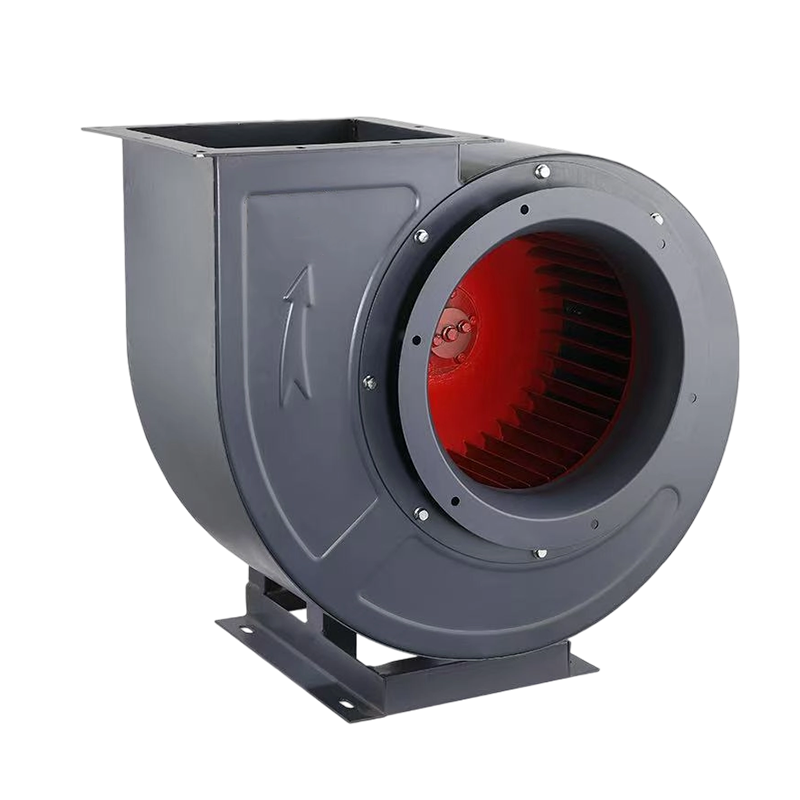
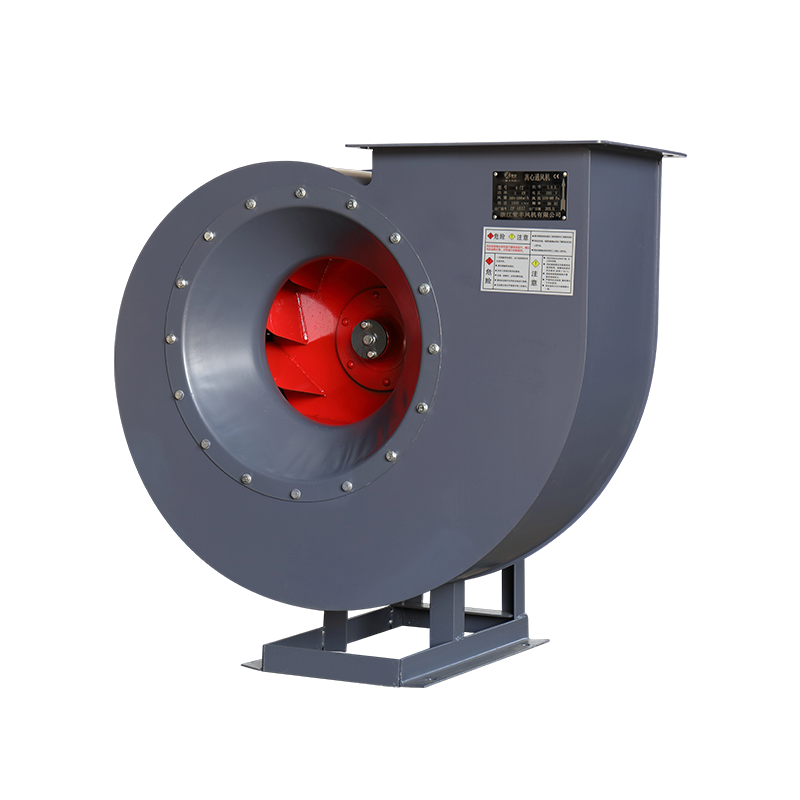
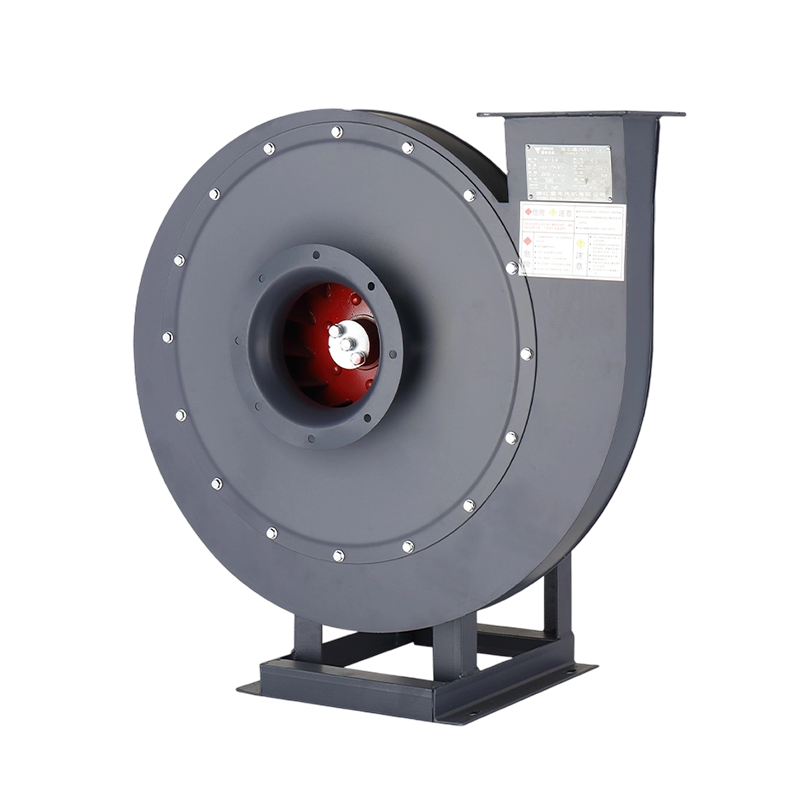
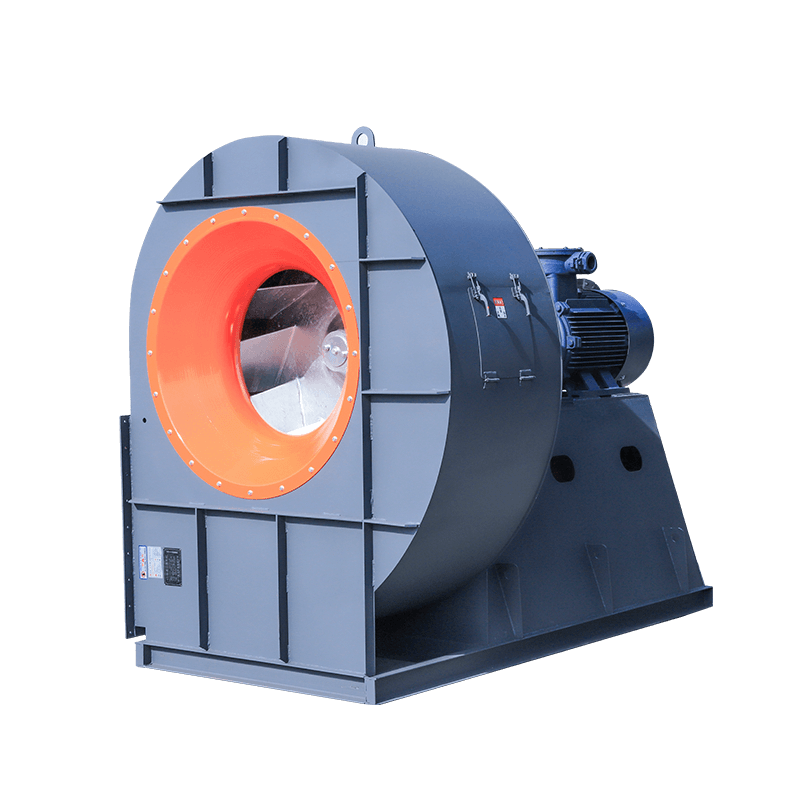
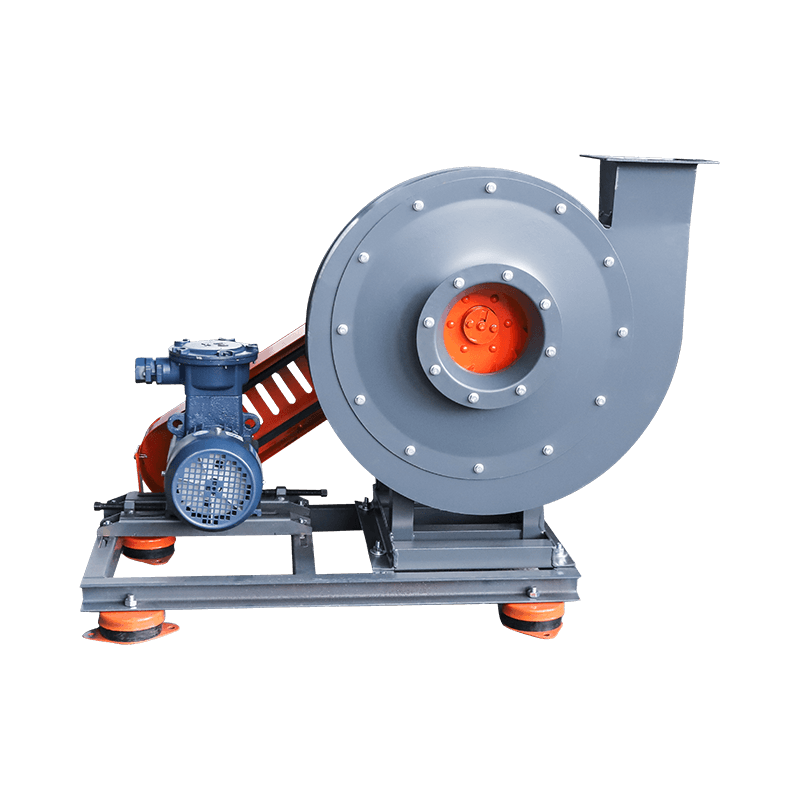
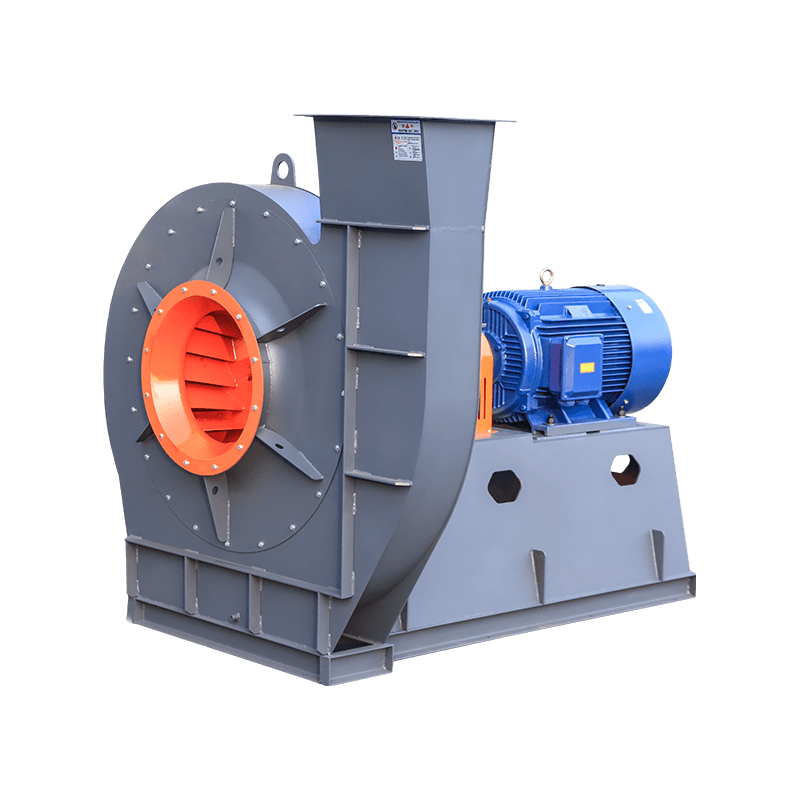
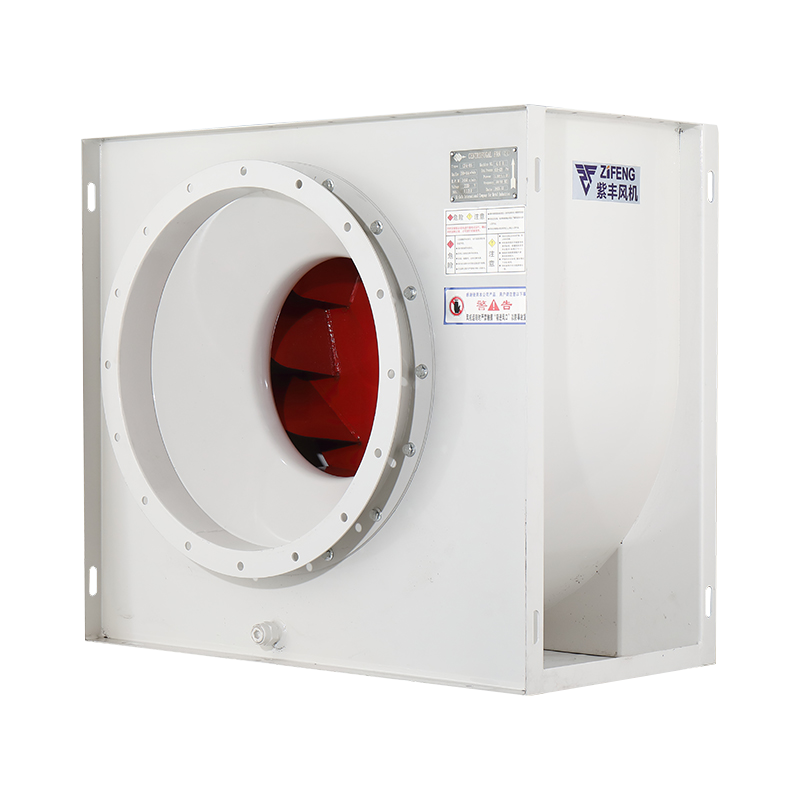
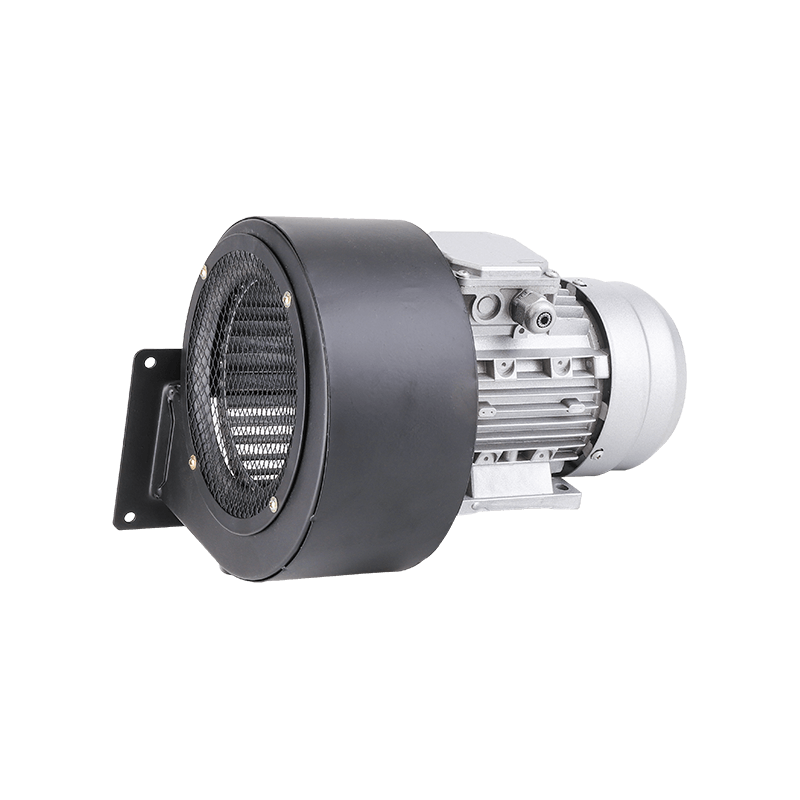
The CF-11 is a low-noise multi-wing centrifugal fan for commercial kitchen grease exhaust and ventilation in canteens, restaurants, hotels and other public spaces. It covers 700–21,000 m³/h at up to 1,600 Pa total pressure, and every configuration carries a published sound level of ≤65–82 dB(A).
What Is the CF-11 Low-Noise Multi-Wing Centrifugal Fan?
The CF-11 was developed to meet two pressures that arrived together: the growth of the air purification industry and tightening environmental noise regulations. Its aerodynamic design applies multi-objective optimisation across noise, efficiency and other performance parameters, so the fan delivers well-matched overall performance rather than a single headline number.
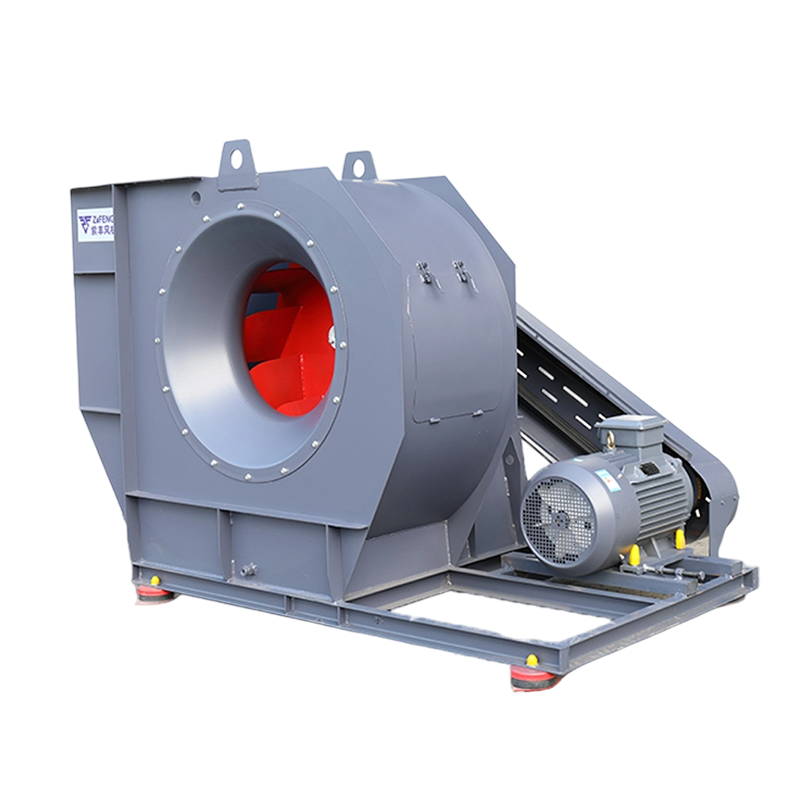
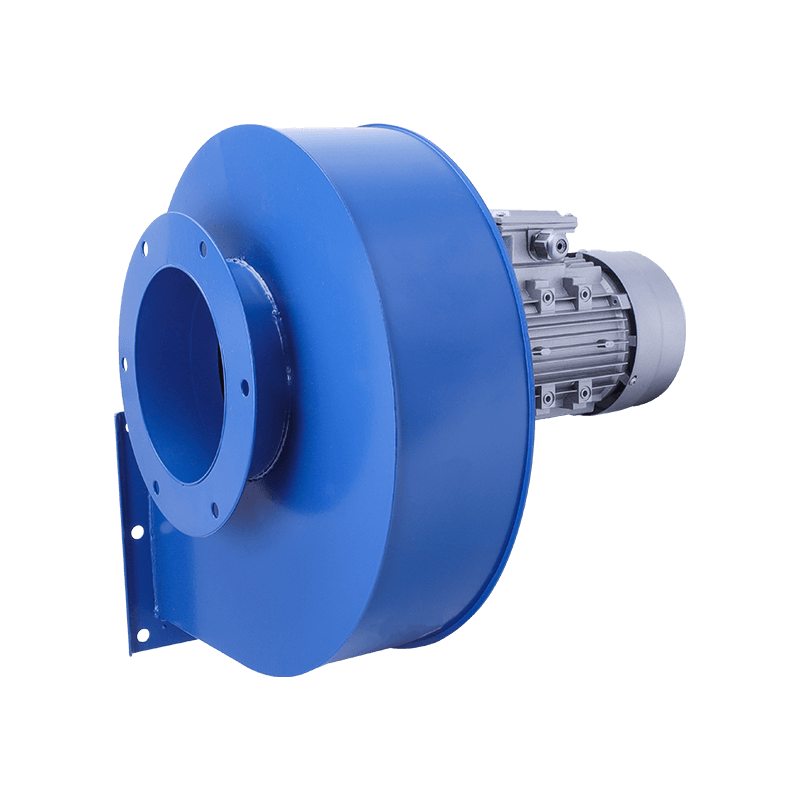
Mechanically it is a multi-wing, forward-curved centrifugal fan. The wheel carries a large number of shallow forward-curved blades, which is what allows a comparatively large airflow from a compact casing. Before assembly, both the impeller and the pulley undergo strict static and dynamic balancing correction — the main reason the unit runs smoothly and preserves bearing and motor life in service.
The standard duty is kitchen exhaust and range-hood exhaust; the sample also lists ventilation in unit canteens, hotels, restaurants and snack stalls, and applications on grain, chemical and plastics machinery. The range is organised by motor speed and power rather than by casing size: select on airflow and pressure first, and we will confirm the frame size.
Key Advantages
Noise and efficiency optimised together
Blade geometry, casing profile and speed were tuned as a set. In practice the fan meets its duty without a separate acoustic enclosure — usually the expensive line item in a kitchen ventilation project.
Multi-wing forward-curved impeller
The forward-curved multi-blade wheel has a high flow coefficient, so the CF-11 delivers its rated airflow from a smaller housing than a comparable backward-curved wheel. On retrofit jobs with a crowded plant room, that is often decisive.
Static and dynamic balancing on impeller and pulley
Both rotating parts are balanced before the fan leaves the factory, so less vibration reaches the ductwork and structure — the usual cause of rattling grilles, loosened hangers and premature bearing failure.
A published sound level for every configuration
Each row of the parameter table carries its own figure, from ≤65 dB(A) at the smaller 6-pole sizes to ≤82 dB(A) at the largest. Where a project has a documented noise limit, you can select directly against it instead of estimating.
Wide configuration window: 0.25 kW to 7.5 kW
The range spans 0.25 kW to 7.5 kW across 2-pole (2,800/2,900 r/min), 4-pole (1,450 r/min) and 6-pole (960 r/min) motors. Smaller hood runs use the 2-pole and 4-pole sizes; large canteens and central kitchen mains use the 6-pole high-flow sizes.
One platform for grease exhaust and general ventilation
The same family covers kitchen grease extraction and general air change in dining halls and public areas, so contractors running multiple sites can standardise spares on a single model.
Technical Parameters
| Speed (r/min) | Power (kW-p) | Airflow (m³/h) | Total Pressure (Pa) | Noise dB(A) |
| 2800 | 0.37-2 | 700–800 | 912–720 | ≤65 |
|---|---|---|---|---|
| 2800 | 1.1-2 | 1900–2500 | 1200–959 | ≤71 |
| 1450 | 0.25-4 | 950–1250 | 410–294 | ≤67 |
| 2900 | 2.2-2 | 2800–4500 | 1600–1200 | ≤76 |
| 1450 | 0.75-4 | 1950–2850 | 490–390 | ≤68 |
| 1450 | 0.75-4 | 2000–3200 | 500–400 | ≤68 |
| 1450 | 1.1-4 | 2500–3800 | 600–440 | ≤68 |
| 1450 | 1.5-4 | 3500–5000 | 620–500 | ≤70 |
| 1450 | 3-4 | 5100–6700 | 1200–1000 | ≤70 |
| 1450 | 2.2-4 | 4995–6640 | 1199–998 | ≤69 |
| 960 | 1.1-6 | 3377–4436 | 526–438 | ≤65 |
| 960 | 1.5-6 | 6098–7560 | 593–474 | ≤70 |
| 1450 | 5.5-4 | 9200–12000 | 841–1116 | ≤76 |
| 1450 | 4-4 | 4500–9900 | 910–700 | ≤76 |
| 960 | 2.2-6 | 4445–10500 | 550–430 | ≤73 |
| 960 | 3-6 | 8380–9900 | 740–600 | ≤71 |
| 960 | 5.5-6 | 8300–17200 | 680–870 | ≤79 |
| 960 | 7.5-6 | 16000–21000 | 870–680 | ≤82 |
Data source: Zifeng Fan product catalogue (2025 edition). Full parameter tables for other frame sizes are available on request.
Airflow and pressure are given as working ranges: the high end of the airflow range pairs with the low end of the pressure range. Size on the duty point in the middle of the range, not on the extremes.
Typical Applications
Commercial kitchen grease exhaust
Hoods, grease filters and long duct runs add static pressure that an axial fan cannot overcome. The CF-11 supplies the pressure to hold capture velocity at the hood while staying inside its published dB(A) figure — important, since the fan usually sits above the dining area.
Staff canteens and food courts
Canteens need high air-change rates over a short service window, and plant space is usually a tight ceiling void or rooftop enclosure. The compact multi-wing casing is what lets a high-flow unit fit where a larger backward-curved fan will not.
Hotels, restaurants and snack stalls
Here the driver is noise compliance, and guests and neighbours decide what is acceptable. Selecting from the ≤65–70 dB(A) rows keeps the installation inside typical daytime commercial limits without a purpose-built enclosure.
Grain, chemical and plastics machinery
The sample lists the CF-11 for production equipment in these sectors. Confirm medium composition and temperature at the enquiry stage so we can match the motor and material configuration.
Public-space ventilation and air change
Where the air is clean and near ambient temperature, the same fan serves as a general air-change unit, letting contractors standardise one model across a project.
How to Select the Right CF-11 Configuration
| Selection input | What to determine | Note |
| Airflow (m³/h) | Room volume × air changes, or hood face area × capture velocity | Match the airflow column |
|---|---|---|
| Total pressure (Pa) | Duct friction + filter/baffle loss + elbow and terminal losses | Match the total pressure column |
| Medium temperature | Normal ambient for kitchen ventilation | Above the normal range, state the value and we will confirm the motor and material configuration |
| Dust and particles | General sample guidance for centrifugal ventilators: not more than 150 mg/m³ | High grease or particulate loading should be declared at enquiry |
| Motor poles and speed | 2-pole for compact high-pressure units, 4/6-pole where lower noise is preferred | Noise generally falls as speed falls |
| Voltage and frequency | Confirm site supply (commonly 220/380 V, 50/60 Hz) | We match the motor to the declared supply |
| Noise limit | dB(A) permitted at the property line or in the occupied space | Select directly from the noise column |
| Installation | Rooftop, ceiling void, plant room or built into equipment | Drive arrangement confirmed per arrangement |
Two rules. Do not pick the largest fan in the table to "be safe" — an oversized fan runs off its best-efficiency point and is usually noisier. And with a long duct run or many elbows, invest in an accurate pressure calculation: kitchen exhaust selections fail on the pressure column more often than on the airflow column.
CF-11 vs. 11-62A vs. DF: Which One Fits Your Project?
All three are low-noise multi-wing centrifugal fans, but they are aimed at different buyers.
| CF-11 | 11-62A | DF | |
| Primary positioning | Kitchen grease exhaust plus ventilation in canteens, hotels, restaurants and public places | Kitchen exhaust and matching to purification / grease-removal systems in the same multi-wing family | Built-in fan for OEM machinery and circulation air supply |
| Airflow range (sample) | 700–21,000 m³/h | Not listed here — request the full table | 305–4,600 m³/h |
| Max total pressure (sample) | 1,600 Pa | Not listed here — request the full table | 1,470 Pa |
| Motor power range | 0.25–7.5 kW | Not listed here — request the full table | 120 W–2.2 kW |
| Noise data | Per configuration, ≤65–82 dB(A) | Request the full table | Per model, 72–86 dB(A) |
| Drive | Multiple pole counts; impeller and pulley statically and dynamically balanced | Same multi-wing family | Direct-coupled motor, no belts |
| Outlet | Per the selected configuration | Per the selected configuration | Round or square flange, angle adjustable |
| Voltage | Confirmed on enquiry | Confirmed on enquiry | 220/380 V listed |
| Typical buyer | Kitchen contractor, hotel and canteen project | Kitchen exhaust and purification integrator | Machine builder (OEM) |
Choose the CF-11 for a kitchen, canteen, hotel or public-space project with a noise limit; the 11-62A when matching a fan into a system built around that series (ask us for the full table and we will size it); the DF when the fan goes inside a machine.
Multi-wing forward-curved vs. 4-72 backward-curved. From 4-72A sample data, a 4A unit at 5.5 kW-2 delivers 4,012–7,419 m³/h at 2,014–1,320 Pa, while the CF-11 at 2.2 kW-2 delivers 2,800–4,500 m³/h at 1,600–1,200 Pa. The backward-curved wheel gives more pressure and, by the general rule of fan engineering, higher efficiency, at the cost of a larger casing; the forward-curved multi-wing wheel gives more airflow per unit of casing volume and is the quieter architecture in the pressure band a kitchen duct needs. The 4-72 sample has no dB(A) column, while the CF-11 publishes a sound level for every configuration.
Installation & Maintenance
General installation, adjustment and commissioning practice for our fans:
- Before installation, check that all parts are complete, that impeller and casing rotation directions agree, that connections are tight, that the impeller, shaft and bearings are undamaged, and that the drive assembly turns freely.
- Leave no tools or debris inside the casing. Coat mating faces with grease or machine oil to prevent rust and ease later dismantling. Inlet and outlet ducting must meet the fan naturally — never force the connection, and never let duct weight rest on the fan.
- Maintain the axial and radial clearance between inlet and impeller, plus shaft horizontality and concentricity with the motor shaft.
- Before the trial run, bar the fan over by hand and close the duct valve or regulating damper.
- Start the trial run only under no-load conditions. Once running normally, open the damper gradually and run continuously at rated pressure and flow.
- Trial-run duration: not less than 2 hours for a new installation, not less than half an hour after overhaul. Running current must not exceed the motor rating.
- Bearing temperature rise must not exceed 40°C above ambient and bearing surface temperature must not exceed 70°C; vibration velocity (RMS) at the bearing must not exceed 4.5 mm/s. Severe vibration, knocking or fast bearing temperature rise requires an immediate emergency stop.
CF-11 specific points:
- Kitchen duty means grease. Deposits on the blades destroy the factory balance and are the usual cause of a CF-11 turning noisy after a year. Set a cleaning interval by cooking volume.
- Provide cleaning access near the fan so the impeller can be cleaned without dismantling the duct.
- Use flexible connections at inlet and outlet to stop vibration reaching the ductwork.
- Never force the duct — the frequent error on rooftop kitchen jobs; a distorted casing will rub the impeller.
Why Choose Zhejiang Zifeng Fan Co., Ltd.
Zhejiang Zifeng Fan Co., Ltd. is located in Xiayuanshan Industrial Zone, Daxi Town, Wenling City, Zhejiang Province, China. We hold ISO9001:2015 quality-system certification and CE certification for EU export, together with explosion-protection certificates and third-party inspection reports. Our 200,000 m² facility carries registered capital of RMB 10 million, employs more than 80 people including five senior technical staff, and has annual output value of RMB 50 million, with equipment including two 3 kW laser cutting machines, ten CNC spinning machines, large hydraulic presses and vertical lathes.
We hold over 100 standardised products and design non-standard fans to customer requirements, with integrated capability across research, development, design, manufacturing, installation and commissioning. We export to Europe, North America, Southeast Asia and the Middle East.
Frequently Asked Questions
1. What is the min order quantity?
There is no fixed published MOQ for the CF-11. Quantity, model mix and configuration are confirmed on the quotation.
2. What is the delivery time?
Lead time depends on configuration, motor specification and order quantity, and is stated on the quotation. Give us the destination port and required delivery window.
3. Can you supply 60 Hz motors or other voltages?
Motors are matched to the supply you declare. Give us the voltage, frequency and phase at the site and we will configure accordingly.
4. Do you make non-standard or OEM versions?
Yes. We hold more than 100 standardised products and design non-standard fans to customer requirements, including OEM configurations for equipment builders.
5. What certifications do you hold?
ISO9001:2015 and CE for EU export, together with explosion-protection certificates and third-party inspection reports. Copies can be provided for project documentation.
6. How do I choose between 2-pole, 4-pole and 6-pole?
Select on noise and pressure. Higher speed gives more pressure from a smaller casing; lower speed runs quieter and suits a tight noise limit. Send airflow, pressure and the dB(A) limit and we will recommend a configuration.
Request a Quote
Send your kitchen exhaust or ventilation requirement and we will size the CF-11 against your duct design, confirm the noise figure at the selected duty point, and return a quotation.
For an accurate quote, please include: airflow (m³/h), total pressure (Pa), medium temperature, dust or grease content, voltage and frequency, installation arrangement, and quantity.
Email: joe@zifengfan.com
Tel: +86-576-86353999