 English
 عربى
News
Home / News / Industry News / How to Choose an Axial Fan for a Small Workshop: CFM Sizing, Static Pressure and Safety

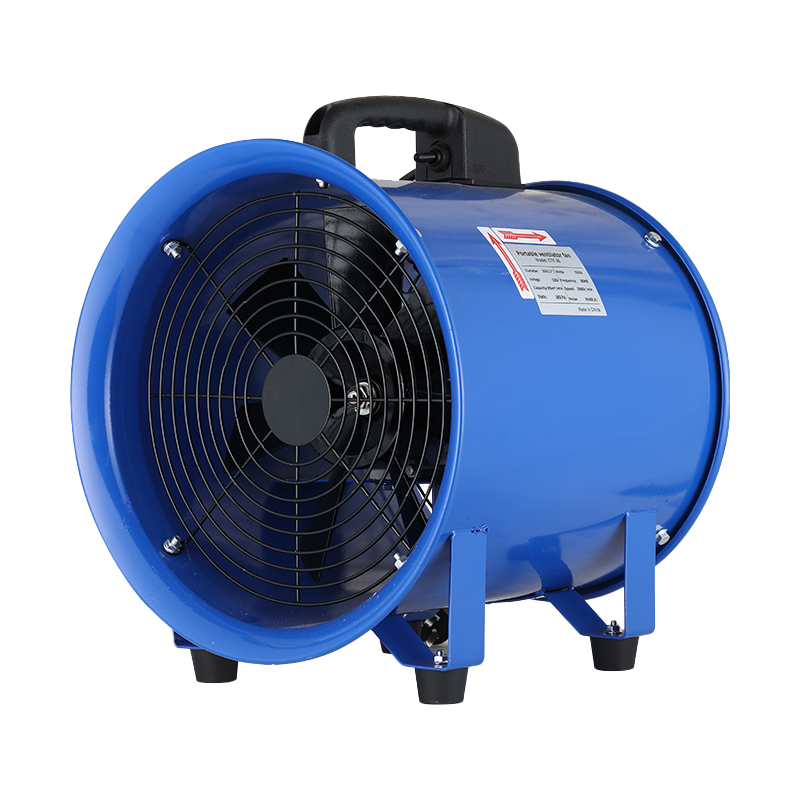
For a small workshop needing general air exchange or heat removal, a wall-mounted axial exhaust arrangement is a practical starting point when airflow resistance is low. Choose the fan by the airflow it delivers at your actual system pressure, then check electrical supply, noise and installation. Welding fumes, wood dust and flammable atmospheres require a separate assessment before a general ventilation fan can be selected.
|
Workshop condition |
Selection direction |
Information to establish |
|
General assembly or maintenance |
Consider axial exhaust for general air exchange. |
Room volume, occupancy, heat sources and supply air. |
|
Heat from equipment |
Check the heat load as well as the ventilation requirement. |
Heat released to the room and acceptable indoor temperature. |
|
Ductwork or filters |
Compare axial and centrifugal fan curves at the required pressure. |
Duct layout, fittings, filter losses and outlet losses. |
|
Welding or woodworking |
Establish source extraction separately from general ventilation. |
Process, contaminants and extraction requirements at each workstation. |
CFM means cubic feet per minute. For a calculation based on air changes per hour, or ACH, multiply the room volume by the selected ACH and convert the result to the required airflow units. The formula calculates air exchange; it does not establish the correct ACH for a particular process.
Required CFM = room volume in ft³ × ACH ÷ 60
Required airflow in m³/h = room volume in m³ × ACH
CFM = m³/h ÷ 1.699 | 1 CFM ≈ 1.699m³/h
For example, a workshop measuring 10m × 8m × 3m has a volume of 240m³. If a project designer specifies 6 ACH, the calculation is 240 × 6 = 1,440m³/h, or approximately 848 CFM. The 6 ACH value is an arithmetic assumption here, not a recommended or code-required rate for workshops.
|
Floor area |
Height |
Volume |
At assumed 6 ACH |
Approx. CFM |
|
30m² |
3m |
90m³ |
540m³/h |
318 |
|
50m² |
3m |
150m³ |
900m³/h |
530 |
|
80m² |
3m |
240m³ |
1,440m³/h |
848 |
|
120m² |
3m |
360m³ |
2,160m³/h |
1,271 |
These examples show how room size changes airflow at the same assumed ACH. They are not a sizing schedule for welding, woodworking or chemical processes. Select the design rate from the applicable local requirements and the actual use of the room. Where heat removal dominates, an ACH-only calculation may not address the thermal load.
The fan must overcome resistance from the complete airflow path. Louvers, guards, ducts, bends, dampers, filters and discharge fittings can reduce delivered airflow. A free-air rating describes operation at zero external static pressure; it is not a promise of the same airflow after installation.
The working point is where the fan curve and the system resistance curve meet. Ask for airflow at the required pressure, rather than selecting on the largest airflow number in a catalogue. Pressure figures below use Pa; 1 in H₂O is approximately 249Pa.
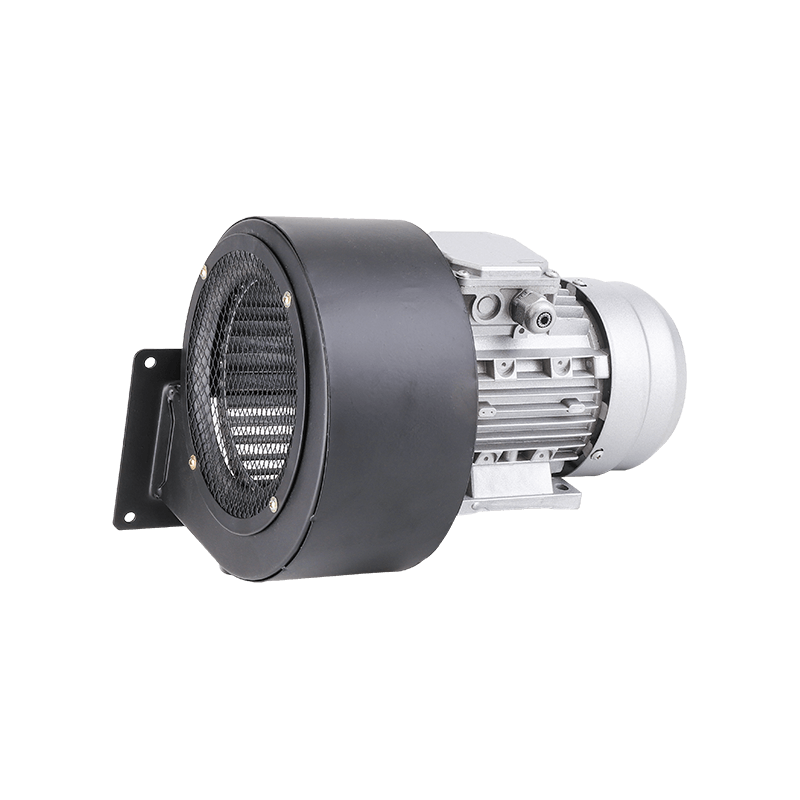
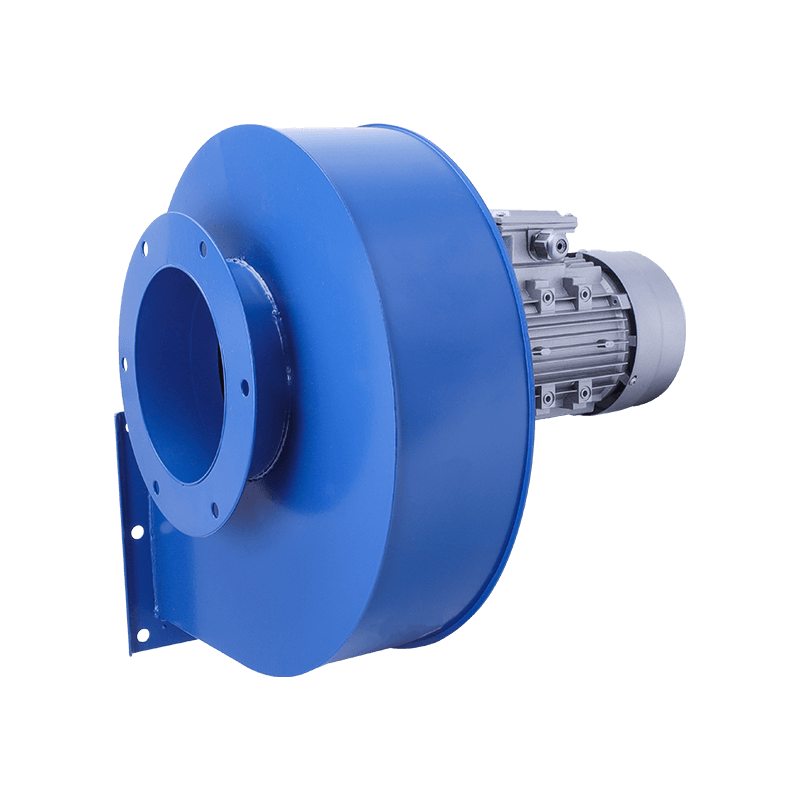
Axial fans are commonly considered for high airflow with relatively low resistance. When the intended duty includes substantial filter or duct losses, compare a pressure-capable axial design with a centrifugal alternative. Fan geometry alone does not establish the correct choice; the complete performance curve and permitted operating range do.
|
Installation |
When to consider it |
Checks before selection |
|
Wall |
A short route to outdoors for general air exchange. |
Wall opening, structural support, guards, weather protection, discharge position and make-up air. |
|
Roof |
An exhaust route where wall space is restricted or a roof outlet suits the building layout. |
A suitable roof assembly, weather sealing, access and manufacturer-approved orientation. |
|
Duct |
Air must be conveyed to a remote intake or discharge. |
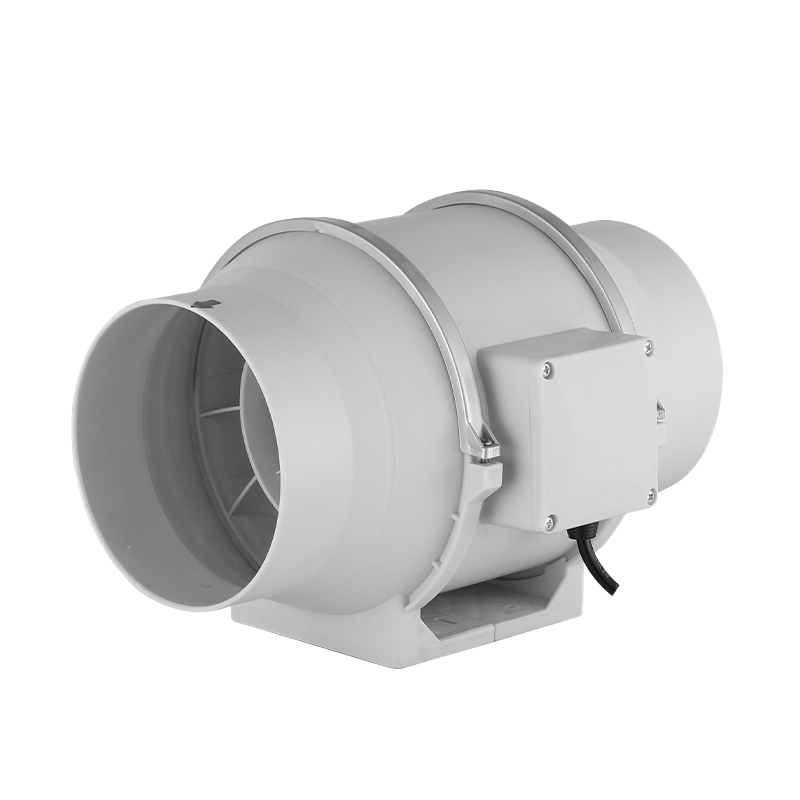
Duct and fitting losses, supports, access and operating point. |
A fan component with a housing or guard is not automatically a complete outdoor wall or roof exhaust system. Confirm the required enclosure, weather protection, guarding and installation accessories before ordering.
Exhaust air needs a planned replacement-air path. Establish where outdoor air enters and how it passes through the occupied area before reaching the outlet. Avoid placing intake and exhaust so close together that incoming air leaves without ventilating the workshop. Include the intake resistance in the system assessment.
Where combustion equipment or other extraction systems are present, assess their interaction with the proposed ventilation. The installation must not create an unsafe pressure condition or move contaminants through occupied breathing zones.
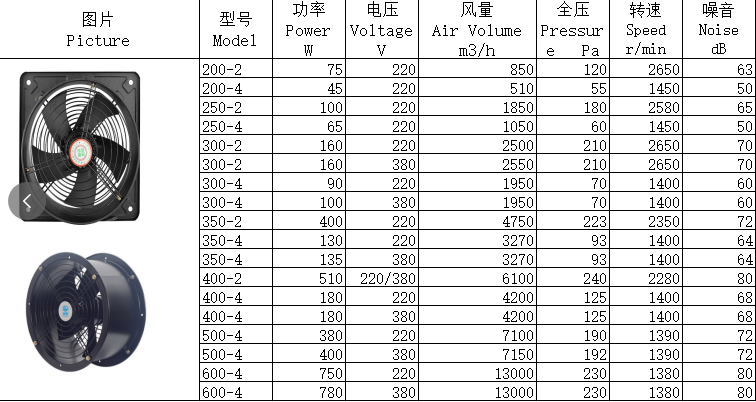
Start with the calculated design duty and a pressure estimate for the complete installation. Then shortlist products whose published curves cover that duty. The largest catalogue flow should not decide the purchase: an oversized unit may need approved speed control, while a smaller unit can fall short once installation losses are included.
For the earlier 80m² example, the arithmetic requirement is approximately 1,440m³/h. A measured point near that airflow can help identify candidates, but the example still needs an actual pressure calculation and an approved ventilation design rate. Do not select a fan solely because its free-air flow exceeds 1,440m³/h.
For a replacement, send the complete existing model code, nameplate, mounting dimensions and photos of both sides of the assembly. Matching the diameter alone does not establish electrical, mechanical or aerodynamic compatibility.
EC control is useful when the required general ventilation duty changes during operation. An AC option may suit an existing fixed-duty arrangement or a like-for-like replacement. Check the permitted control method for the exact model; do not assume that a domestic dimmer or an arbitrary frequency controller is suitable.
Yes. General room ventilation and source extraction perform different jobs. For indoor welding, UK HSE guidance describes local exhaust ventilation that removes fume at the source. For woodworking, HSE calls for extraction at the machine and consideration of the required airflow at each machine connection. These are useful technical references; the applicable local requirements govern the project.
A general wall exhaust fan should not be presented as a complete welding-fume or wood-dust control system. Establish the capture method, filtration or separation, discharge requirements and fan location within that system before selecting equipment. A clean-air ventilation fan is not automatically suitable for carrying chips, sparks or abrasive dust.
A1 With a 3m ceiling, its volume is 240m³. At an assumed 6 ACH, the calculation gives 1,440m³/h, approximately 848 CFM. The actual design rate depends on the workshop use and applicable requirements. Welding or dust capture must be sized separately at the source.
A2 Compare the airflow needed at the complete system pressure. An axial fan can be a practical option for low-resistance general exhaust. A ducted or filtered system may justify a centrifugal design, but the final choice must come from the relevant fan curves.
A3 Check noise at the intended duty, not only the headline catalogue figure. Avoid obstructed inlets and outlets, use the specified mounting arrangement and keep the assembly secure. Where the fan permits it, speed control can help match airflow to demand. Confirm that the resulting duty still meets the ventilation requirement.
A4 Yes. Plan the replacement-air route and include its resistance. A larger exhaust fan cannot compensate for an inadequately assessed air supply path. Check how the new system interacts with other extraction and combustion equipment.
A5 A standard general ventilation fan is not a substitute for source extraction. Welding and woodworking require a process-specific assessment. Any explosive atmosphere additionally requires a suitable certified configuration and a compliant overall installation.
Copyrighte © Zhejiang Zifeng Fan Co., Ltd. All Rights Reserved.