 English
 عربى
عربى
Introduction
This article takes an in-depth look at centrifugal blowers.
You will learn:
- How Centrifugal Blowers are Used
- How Centrifugal Blowers Work
- And much more…
Chapter One - How Centrifugal Blowers Work?
Centrifugal blowers are widely favored for both industrial and commercial air movement needs due to their straightforward design, high durability, and reliability. This type of industrial fan is engineered for exceptional performance in a variety of demanding environments, making centrifugal blowers an essential solution for applications involving ventilation, air handling, and dust collection. Their simple construction not only ensures longevity but also enhances energy efficiency and ease of maintenance, contributing significantly to their widespread use and effectiveness.
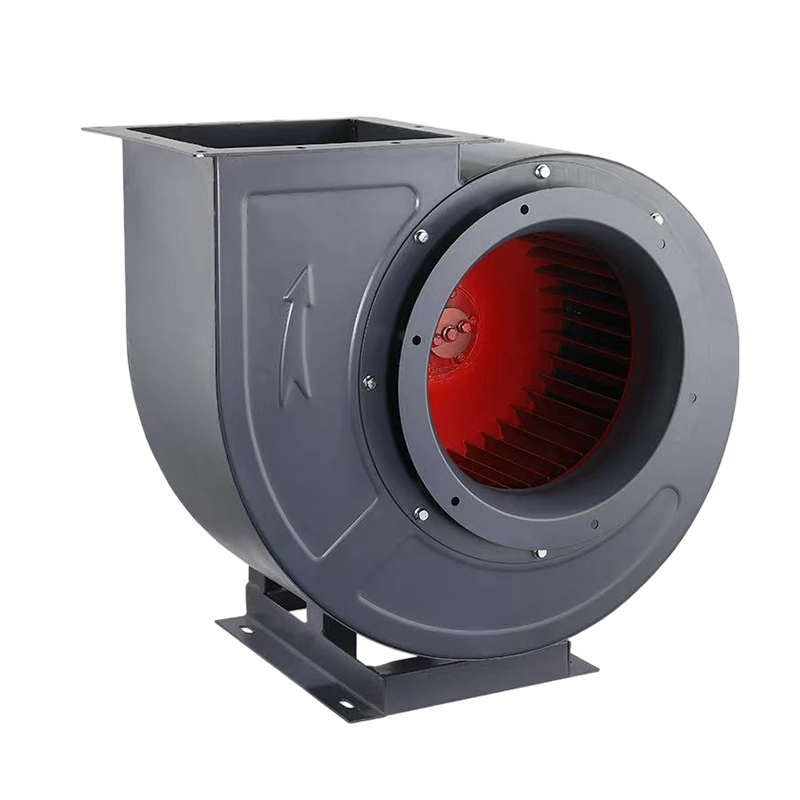
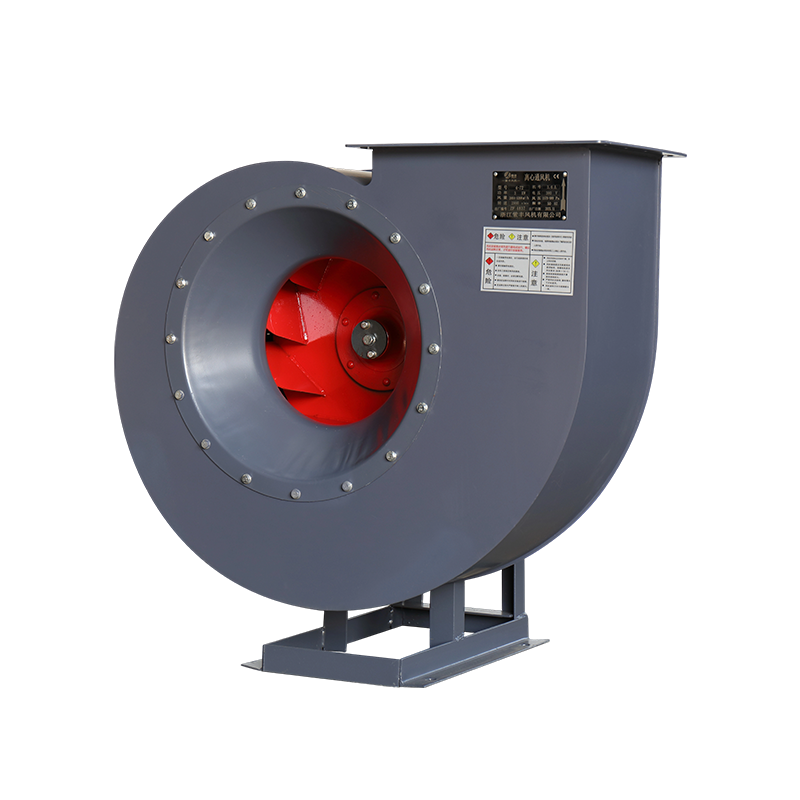
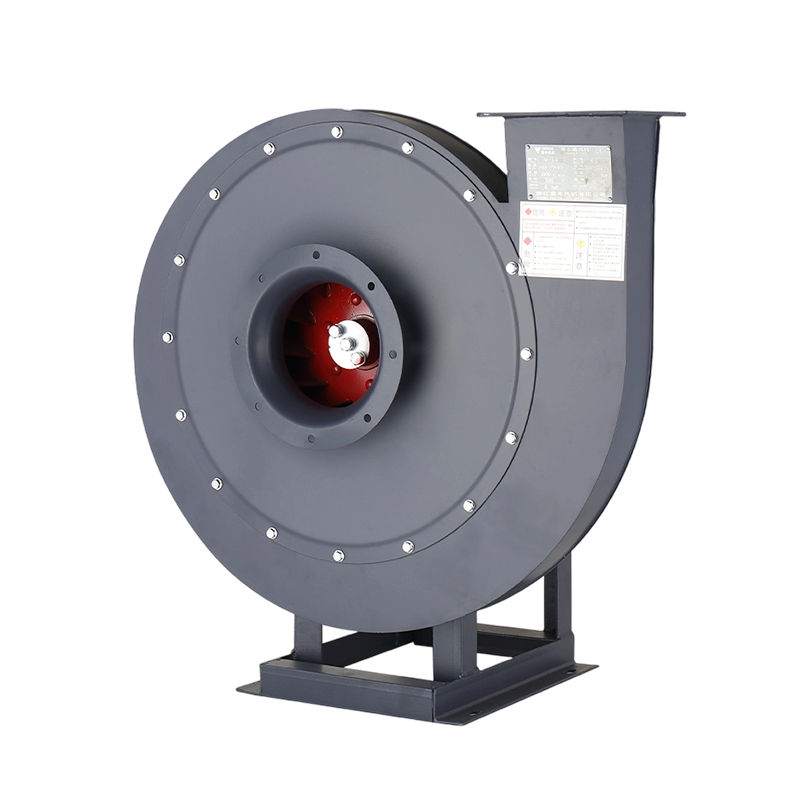
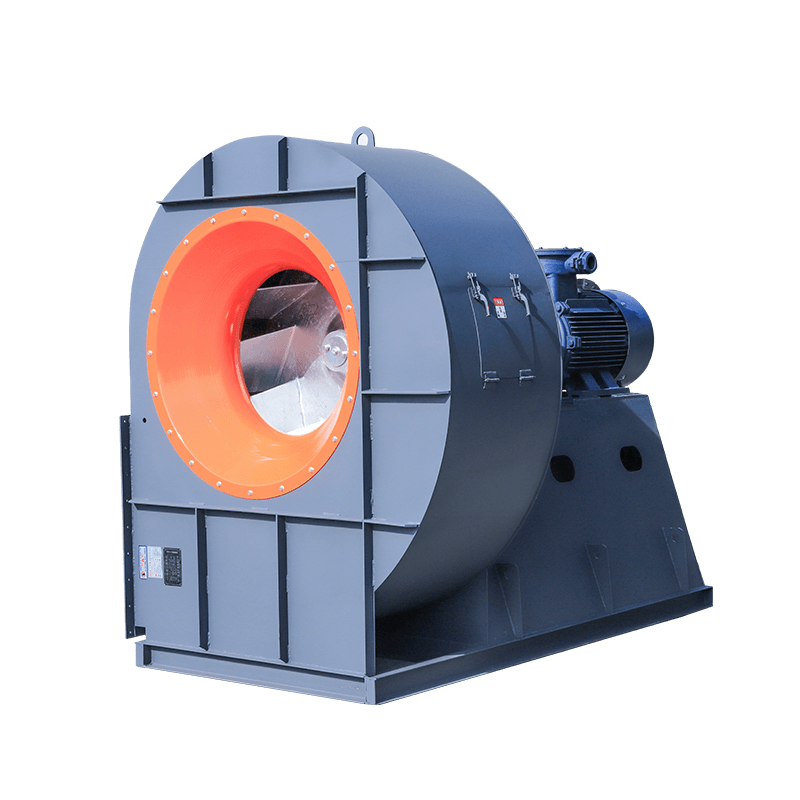
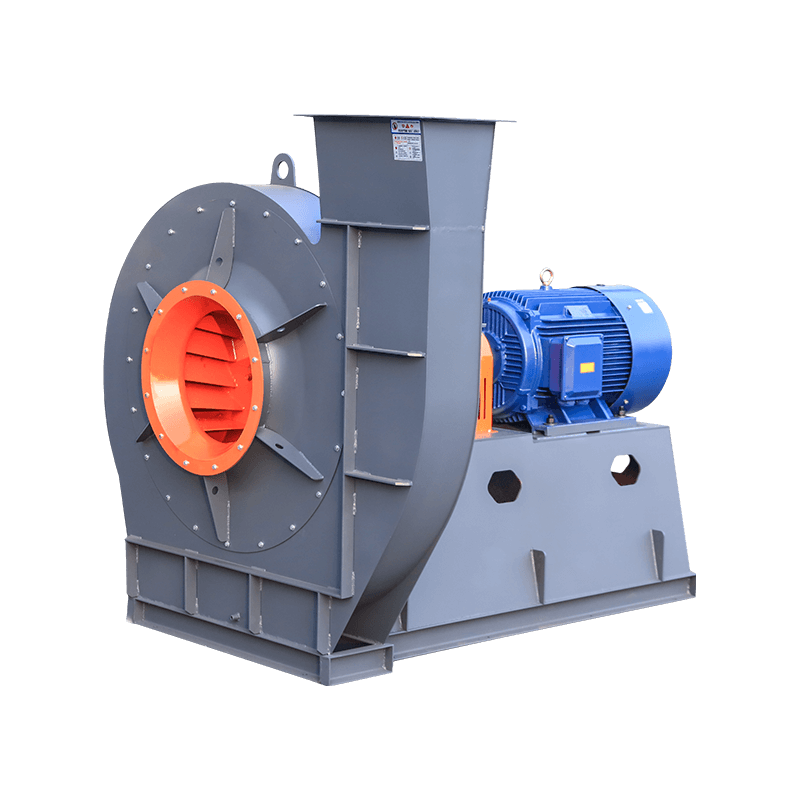
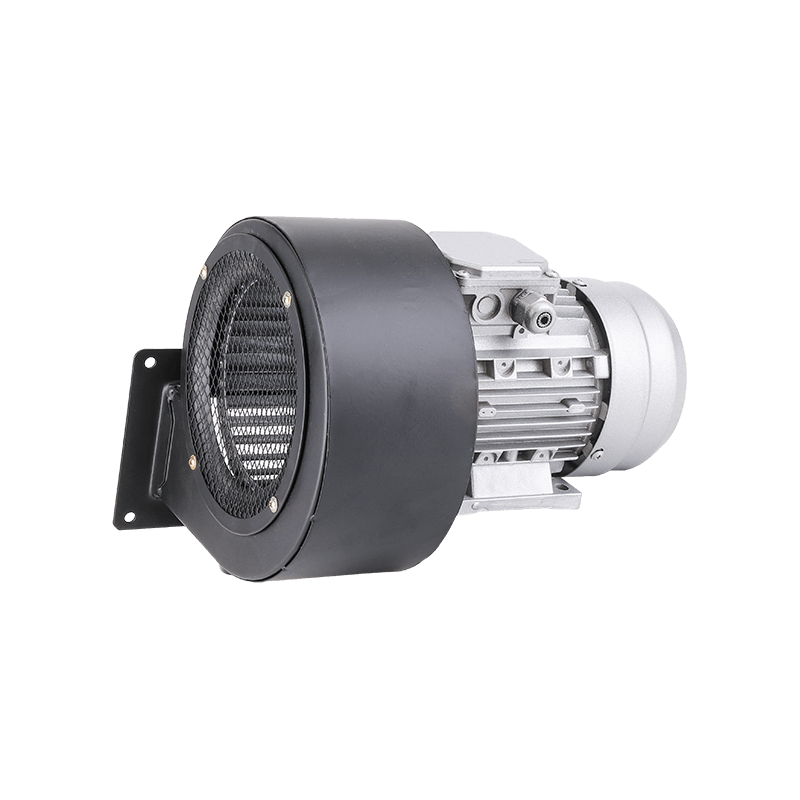
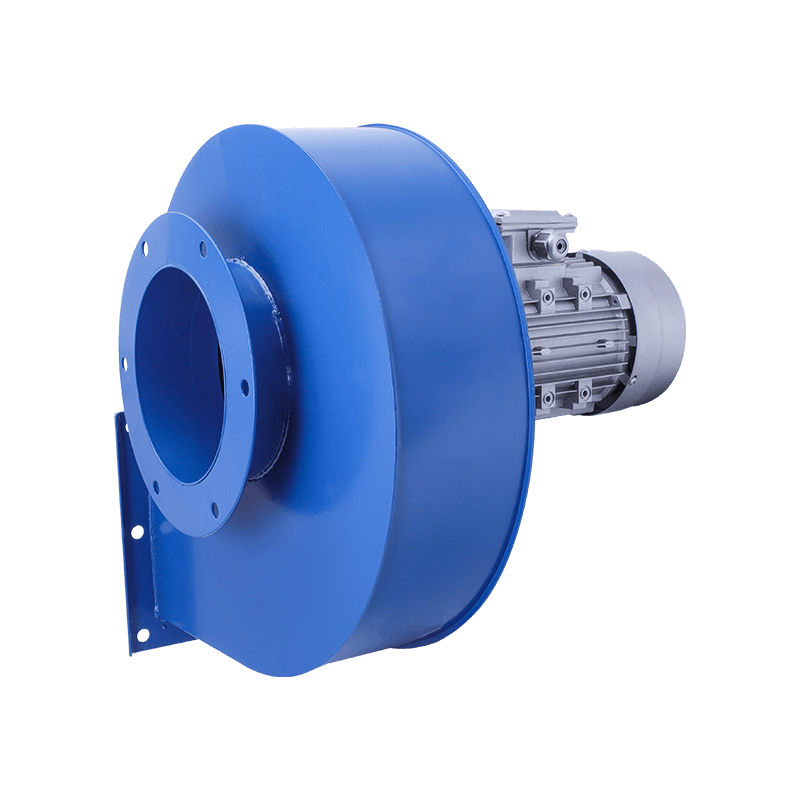
The typical design of a centrifugal blower includes a powerful electric motor, a fan wheel (often referred to as an impeller), and a robust housing. As the fan wheel spins, the rotating impeller efficiently captures the incoming airflow—sometimes laden with particulates, fumes, or contaminants—and expels it forcefully through the discharge outlet. The direction and velocity of this forced air can be controlled with remarkable precision, making these blowers ideal for HVAC systems, industrial ventilation, pollution control, and material conveying systems.
In many cases, centrifugal blowers are chosen over axial blowers or fans for their superior ability to move air or gases quickly and efficiently at higher pressures. Their design allows them to handle a wide range of air volumes and static pressure requirements, making them a preferred option for both clean air and harsh, contaminated air applications. Additionally, centrifugal blowers are valued for their ability to minimize noise and vibration compared to other types of air moving devices, boosting their desirability across various industries.
How Centrifugal Blowers Work
Electric Motor
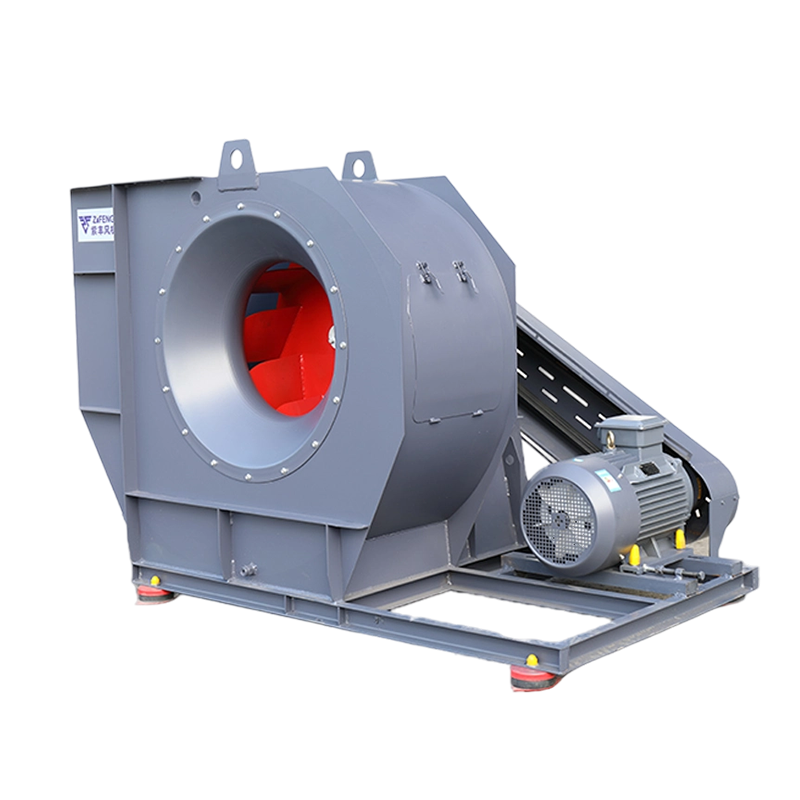
The electric motor is a crucial component of a centrifugal blower, responsible for rotating the impeller. This rotation generates powerful airflow, which is expelled at a right angle (perpendicular) to the incoming airstream. Centrifugal blowers can have either a direct drive or an indirect belt-driven (also known as V-belt drive) mechanism, each impacting the blower's efficiency and application range.
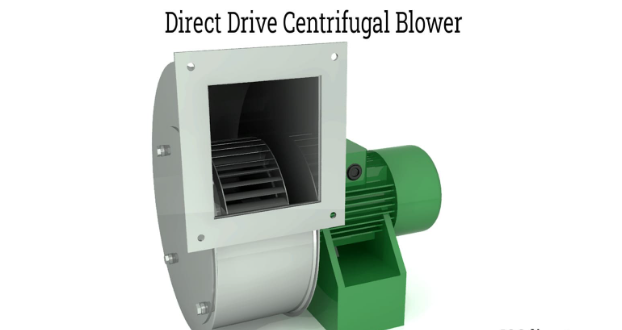
In a direct drive setup, the motor's drive shaft is directly connected to the impeller. This configuration provides enhanced power transmission, delivering higher torque and responsiveness, allowing precise control of the blower's speed and performance by adjusting the motor's speed. The direct drive system eliminates the need for tensioners, belts, or chains, reducing maintenance requirements, improving energy efficiency, and lowering the likelihood of mechanical repairs—making it ideal for continuous-duty operations.
Direct drive centrifugal blowers can be further divided into high-pressure and low-pressure blowers. High-pressure direct drive blowers are used for the combustion of solid, liquid, and gas fuels or pneumatic conveying systems, where pressurized air is crucial for transporting materials. Low-pressure direct drive motors are typically employed for cooling air, dilution ventilation, ejector systems, exhaust ventilation, and general air circulation across commercial, institutional, and residential spaces.
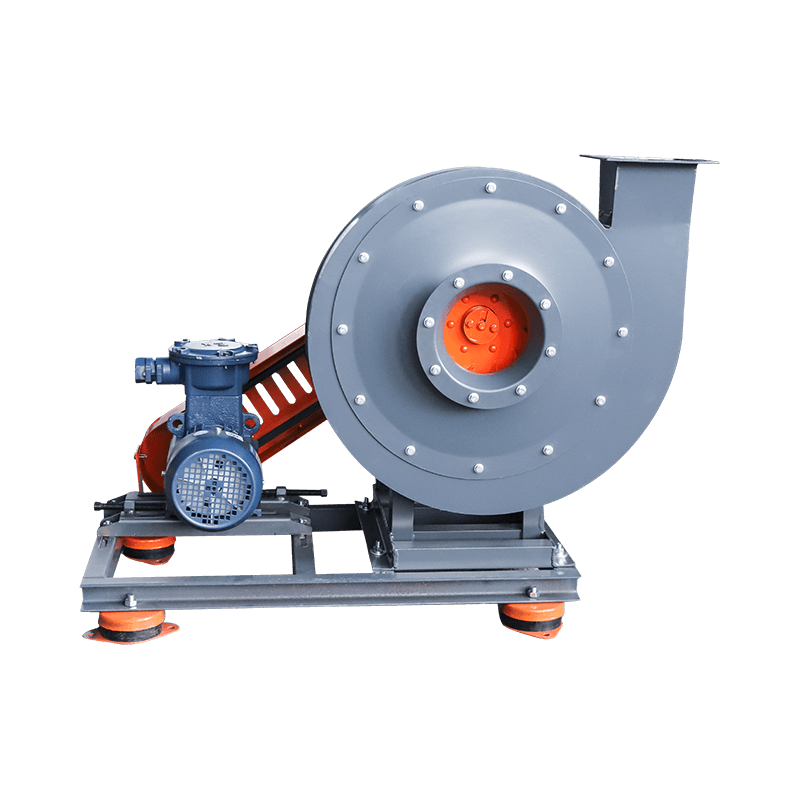
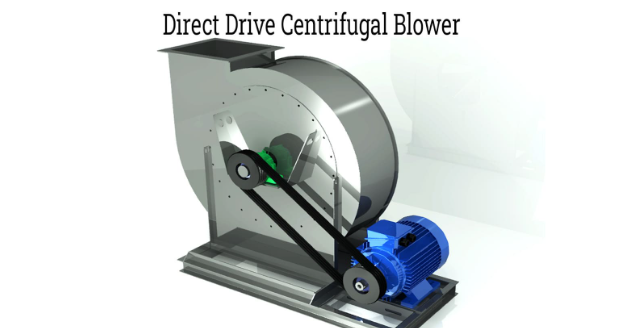
Belt-driven motors, also known as indirect drives, utilize a flexible coupling or V-belt to operate. The belt connects to the motor and allows for variable speeds, enabling end-users to fine-tune airflow for variable air volume applications or process-specific requirements. This type of blower is well-suited for low to medium static pressure applications, especially when energy savings through speed adjustments are required. By transferring power through the belt, this design reduces the torque required by the motor, which in turn helps lower maintenance and repair costs and extends motor life. Furthermore, belt-driven centrifugal blowers offer the flexibility to accommodate different impeller sizes, allowing for easy customization of airflow and pressure ratings.
Fan Wheel or Impeller
The speed at which the fan wheel rotates is determined by the drive motor's design and operating conditions. The fan wheel, or impeller, is paramount to the centrifugal blower's overall efficiency and performance. It is responsible for imparting velocity to the airflow, generating the necessary static pressure, housing the blades, and ultimately defining the blower's type—whether it's a backward curved, forward curved, or radial type impeller.
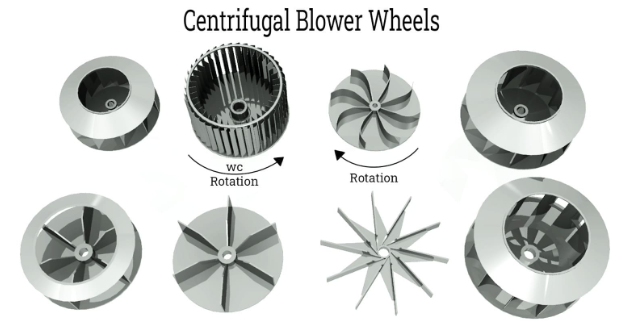
Centrifugal fan wheels typically feature a cylindrical shape with parallel slits (vanes) that do not intersect. These blades can be engineered in a variety of forms, including straight, angled (backward-inclined or forward-curved), or curved, each influencing the airflow characteristics and efficiency. The choice of blade type affects the blower's noise level, pressure capability, airflow range, and energy consumption. Air exits the impeller tangentially to each vane's tip, creating a high-velocity airstream that is captured and directed by the blower housing.
Choosing the right centrifugal fan largely depends on the type of fan wheel, which in turn influences the blower's application, pressure requirements, and noise level. The fan wheel material—often steel, aluminum, or specialized alloys—is also selected based on environmental factors such as the presence of corrosive or abrasive substances, high temperatures, or explosive atmospheres.
Below is a diagram showcasing some of the available fan wheel designs, as well as their typical industrial and commercial uses:
- Backward Curved Impellers: Preferred for energy efficiency and low noise in HVAC systems.
- Forward Curved Impellers: Common in high-volume, low-pressure applications such as ventilation fans and air handling units.
- Radial Bladed Impellers: Used for handling particulate-laden or abrasive air streams, often in material handling or dust collection.
Impeller Housing
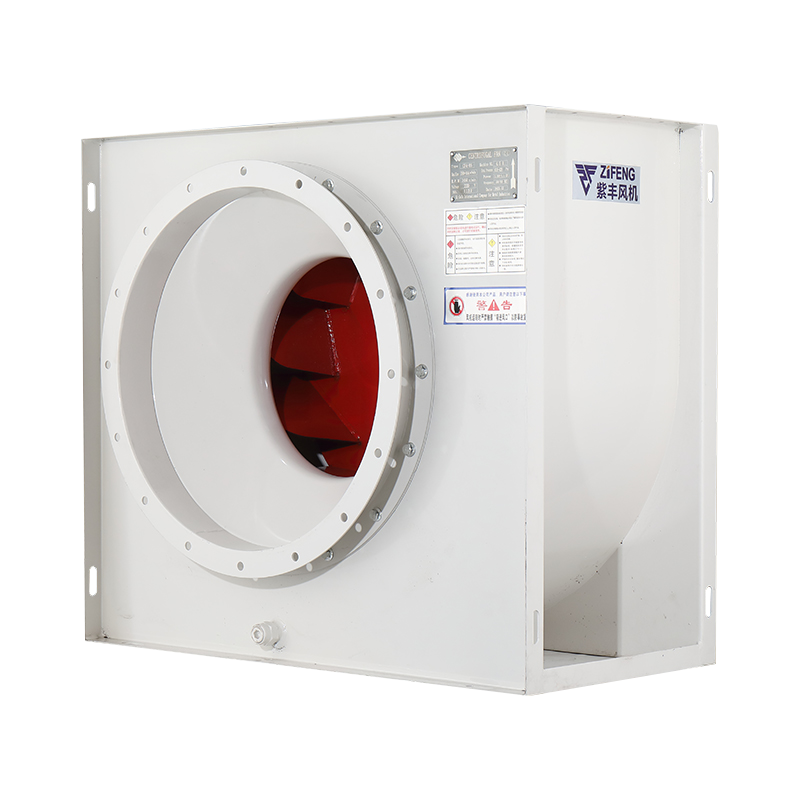
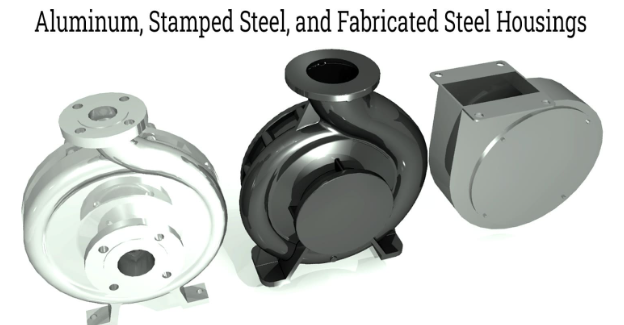
The housing, or casing, of a centrifugal blower is engineered to efficiently channel and direct the outgoing airflow while minimizing turbulence and noise. The materials used for constructing the housing are chosen based on the specific application—industrial, commercial, or hazardous environments—with robust materials required for corrosive or high-temperature conditions. Common options include stainless steel, galvanized steel, aluminum, and specialty composite materials, with stainless steel being the most frequently selected for its durability, corrosion resistance, and ease of maintenance in industrial air handling scenarios.
The discharge angle of the airflow from the centrifugal blower is influenced by the housing design. To ensure smooth airflow and minimize obstructions, the ducting is carefully welded and polished. A well-crafted housing reduces energy loss, prevents leakage, and supports consistent static pressure across the system.
The housing features a characteristic scroll (volute) shape that accelerates the airflow as it moves toward the outlet, helping to maximize pressure and volume delivery. This design redirects the air twice before it exits into the connected ductwork or air system. For additional protection against harsh operating conditions and chemical exposure, housings can also be treated with coatings or industrial-grade paints to increase longevity and resist abrasion, humidity, or corrosion.
Blower Airflow
The core function of a centrifugal blower or fan revolves around its airflow mechanism, which separates it from axial fans and traditional exhaust solutions. A centrifugal blower draws air, fluid, process gas, or particulate matter into the inlet, making it suitable for industrial dust collection, fume extraction, pneumatic conveying, and combustion air supply. The rotating blades force the air out through the outlet, creating a distinct airflow pattern: the air moves radially (perpendicular to the impeller shaft) rather than axially (parallel), resulting in stable, high-pressure air delivery for numerous ventilation and air-moving tasks.
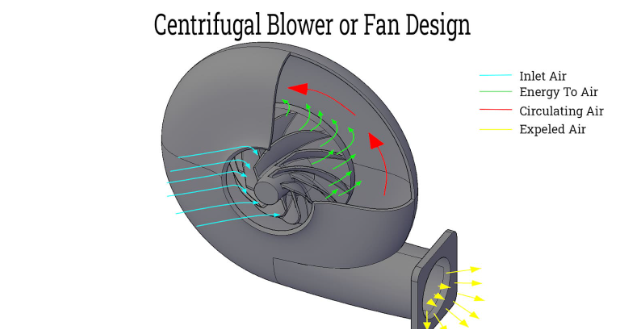
This airflow is generated by the rotating blades, which create a low-pressure zone at their center (the eye of the impeller), drawing in air. As the impeller spins, centrifugal force propels the air outward to the impeller tips, where it is accelerated into a high-pressure zone. This kinetic energy is then converted into static pressure as the air is captured and directed by the scroll housing.
The low-pressure zone at the center of the blades forms a vacuum effect that continuously pulls air—or process gases—inward, ensuring a consistent and powerful flow. This incoming air transitions from the low-pressure area to the high-pressure zone at the blade edges, circulates around the impeller, and then exits smoothly through the housing or enclosure. This mechanism is key to the blower’s ability to handle varying system resistance, making it reliable for fluctuating industrial process loads, environmental air movement, or large-scale HVAC systems.
In the diagram below, the blue arrows represent the air being drawn into the low-pressure zone, while the green arrows show the air moving from the low-pressure area to the high-pressure zone, circulating and being expelled from the blower. This visualization demonstrates why centrifugal blowers are integral components in process ventilation, pollution control, pneumatic conveying, and material handling industries, where precise, high-pressure airflow is critical to operational success.
Frequently Asked Questions
What is a centrifugal blower and how does it work?
A centrifugal blower is a device that moves air using centrifugal force generated by a spinning impeller. Air is drawn in and expelled at a right angle to the intake, allowing precise control over airflow and pressure for ventilation, air handling, and dust collection.
What are the main types of centrifugal blower impellers?
Centrifugal blowers use impellers with backward curved, forward curved, radial, airfoil, radial tip, and curved airfoil types. Each impeller design suits different airflow, pressure, efficiency, and noise requirements in commercial and industrial applications.
How do belt drive and direct drive centrifugal blowers differ?
Direct drive centrifugal blowers connect the motor directly to the impeller for higher efficiency and lower maintenance, ideal for continuous duty. Belt-driven designs use a belt to offer variable speed and airflow, suited for adjustable or low-to-medium pressure requirements.
In what industrial applications are centrifugal blowers essential?
Centrifugal blowers are vital in pneumatic conveying, dust collection, HVAC systems, fume extraction, grain drying, pollution control, and process ventilation. Their design ensures reliable, high-pressure airflow for challenging environments with dust, particulates, or contaminants.
How do centrifugal blower performance curves help in blower selection?
Performance curves display how a centrifugal blower will deliver airflow, static pressure, and power across conditions. They help engineers and buyers choose optimal blowers for specific system demands, improving energy efficiency and system reliability.
What materials are commonly used for centrifugal blower housings in industrial settings?
Industrial centrifugal blower housings are typically made from stainless steel, galvanized steel, aluminum, or specialty composites. The choice depends on corrosion resistance, temperature requirements, and specific environmental conditions.
Chapter Two - What are some common uses for centrifugal blowers?
Centrifugal blowers are utilized in applications where continuous and reliable air movement is necessary. Any fan designed to achieve a high-pressure ratio is classified as a blower. These devices are primarily employed in processes requiring a steady and consistent airflow, such as in pneumatic conveying systems.
Among the various blower options, centrifugal blowers offer distinct advantages due to their broad operational range and high-speed capabilities. Key factors that vary among centrifugal blowers include airflow capacity, blower type, dimensions, and operating pressure. Despite these variations, centrifugal blowers can be tailored and adjusted to suit a wide array of industrial applications.
Uses for Centrifugal Blowers
Clean Air Handling
Air movement is essential in industrial settings as it ensures a comfortable working environment and facilitates the removal of toxic or harmful fumes. Centrifugal blowers used in industrial applications come in various designs, including backward curved, backward inclined, and radial configurations.
Industrial exhaust blowers or fans are specifically designed to handle clean, dry gases or lightly particulate-laden gases. These heavy-duty blowers are crucial for operations where exhaust air needs to be efficiently replaced with fresh air.
Dust Loading
Dust loading centrifugal fans and blowers are part of a dust collection system to assist in the improvement of air quality and to create safe breathing conditions. Centrifugal dust loading blowers capture, collect, and move particulate-loaded air through an air-scrubbing system.
Centrifugal blowers come in various configurations to suit different applications. They can be integrated into hood systems designed to capture dust and contaminants from workspaces or serve as the primary component in air filtration systems, such as baghouses, traps, or ductwork setups.
Pneumatic Material Handling
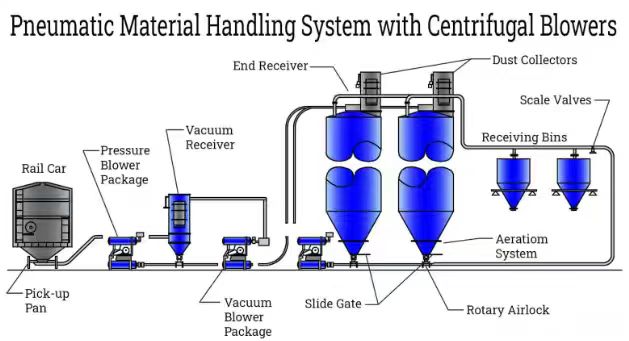
The core principle of a pneumatic material handling system is to maintain consistent pressure throughout to avoid blockages and material fallout. These systems are capable of transporting a wide range of materials, including sand, pellets, chips, and coal lumps.
A pneumatic system operates using a combination of feeders, fans, blowers, ductwork, and filtration units. When selecting a centrifugal blower for such a system, the key consideration is the material's density. This factor influences the choice of blade type, drive mechanism, and any additional accessories required for optimal performance.
Saturated Air Fan
Saturated air is air that has been moistened by humidity or some form of gas. The air in these conditions is normally heavier due to the particulate content and requires a more robust centrifugal blower. The moisture content of the air necessitates the use of a centrifugal blower made of stainless steel and has some form of a coating such as epoxy.
The primary challenge with handling saturated air is the risk of corrosion, which can significantly damage the blower. To address this, centrifugal fans and blowers used for such applications are constructed from corrosion-resistant materials and often feature protective coatings. A well-designed and meticulously engineered system helps reduce repair and maintenance costs, while also extending the lifespan of the blower.
High-Temperature Applications
Heat treatments, stress relieving, industrial furnaces, and ovens use convection to circulate heated air. Centrifugal blowers and fans for this type of operation must be highly resilient, durable, and long-lasting to withstand high-temperature conditions.
Despite advanced design and engineering for high-temperature applications, centrifugal fans and blowers are prone to wear and eventual failure due to harsh conditions. Therefore, it is crucial to regularly monitor and maintain these systems to avoid severe failures.
In high-temperature environments, specially designed plug blowers and fans are often employed. These plug blowers are built to handle large volumes of air at low static pressures and come in various wheel configurations and materials to suit different needs.
Dairy Processing
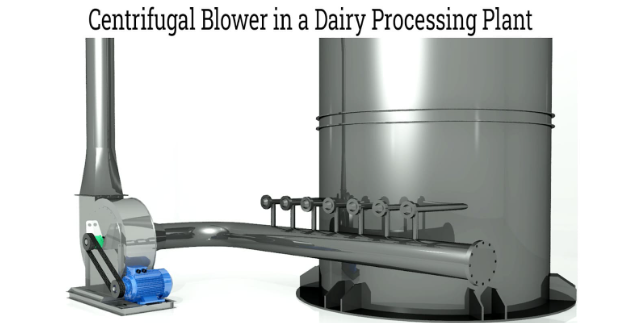
Centrifugal blowers in the dairy industry primarily serve to circulate and recycle air within processing plants. These blowers must comply with Food and Drug Administration (FDA) regulations applicable to food processing equipment. In addition to their role in air circulation and cleaning, centrifugal blowers are also integral to the drying processes for cheeses and other dairy by-products.
Incinerator Waste Disposal
Incineration typically involves the disposal of waste through combustion. Centrifugal blowers used in incinerators are specifically engineered to handle the gas volume and pressure demands of these systems. A high-pressure centrifugal blower is employed in a forced draft system to supply air to the incinerator, while an induced draft blower is used to manage exhaust on the output side.
For fluidized bed furnaces that burn sludge, a multistage blower system is utilized to achieve the high pressure needed for adequate air supply. These blowers are specially designed to mitigate any adverse effects from sludge or decomposed gases.
The standards for blowers used in incineration are stringent and continue to evolve with increasing environmental concerns. Manufacturers are committed to adhering to the requirements set by the Air Movement and Control Association (AMCA) and ensuring compliance with air quality regulations.