 English
 عربى
عربىNews
Home / News / Industry News / How to Select an Industrial Centrifugal Fan: Airflow, Static Pressure & Motor Sizing

Here is something we see almost every day. An inquiry arrives that says only:"Need one centrifugal fan, model 4-72, 5.5 kW."No airflow. No pressure. No gas temperature. Nine times out of ten, the fan that gets shipped will either be oversized and waste power, or undersized and never reach the airflow the customer actually needs.
A centrifugal fan is not bought by model number — it is bought by a duty point. This guide walks through the five steps our application engineers use, and finishes with a worked example you can copy for your own project. At the end you can also download our sizing data sheet: fill it in and send it back, and you will have a firm selection and a price within 24 hours.
| Parameter | Why it matters | How to get it |
|---|---|---|
| Airflow (m³/h or CFM) | Sets the fan size and impeller diameter | Process requirement, room air changes per hour, or hood face velocity × area |
| System resistance (Pa / mmH₂O) | Sets the pressure class — the single common cause of a wrong selection | Sum of duct friction, elbows, filters, hoods, silencers. See Step 2 |
| Gas temperature (°C) | Hot gas is less dense, so the fan produces less pressure; it also decides bearing cooling and housing design | Process data. Above 200 °C you need a high-temperature build |
| Gas composition & dust load | Decides blade type (backward / radial), wear liners, and whether you need explosion-proof construction | Chemical analysis, mg/m³ dust concentration |
| Site altitude (m) | Air density drops roughly 8% per 1,000 m — the fan must be corrected or it will underperform | Plant location |
| Power supply | 220V/380V/415V/440V, 50 or 60 Hz; decides motor design and whether a VFD is needed | Local grid |
Airflow is usually fixed by the process, not by the fan. Three common ways to get it:
Always add a margin of 5–10% for duct leakage and filter ageing — but resist the temptation to add 30%. Oversizing pushes the duty point to the right on the curve, into a region of lower efficiency and higher noise.
This is where projects go wrong, because pressure is invisible. Add up every element the air has to pass through:
| Element | Typical resistance | Notes |
|---|---|---|
| Straight duct | ≈ 1 Pa per metre at 8–12 m/s | Rises steeply with velocity — pressure goes up with the square of speed |
| 90° elbow | 10–30 Pa each | Use long-radius elbows; a sharp elbow costs far more |
| Flexible hose | 30–80 Pa per metre | Keep runs short and taut |
| Bag filter / cartridge | 400–800 Pa clean, 1,000–1,500 Pa loaded | Always select for the loaded condition, not the clean one |
| Hood / inlet | 50–150 Pa | Depends on hood geometry |
| Silencer, heat exchanger, scrubber | Take from the supplier's datasheet | Scrubbers can easily add 800–1,500 Pa |
Figures are typical planning values for estimating an inquiry. Final values must come from your duct design or from measurements on the existing line.
Fan catalogues publish performance in standard air (density 1.2 kg/m³, 20 °C, sea level). Your gas is rarely standard air. Two corrections apply:
Practical shortcut: every 1,000 m of altitude costs you about 8% of pressure; gas at 200 °C costs you about 40%. Ignore this and the fan that looked nice on paper will arrive on site and move too little air.
Plot your required airflow on the horizontal axis and your corrected pressure on the vertical axis; the crossing is your duty point. Three rules:
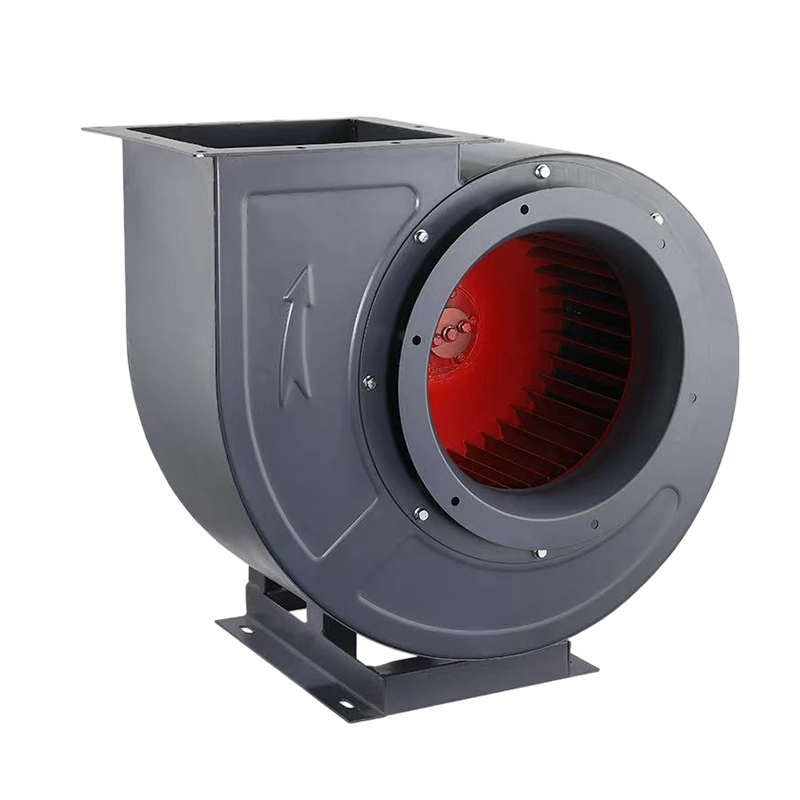
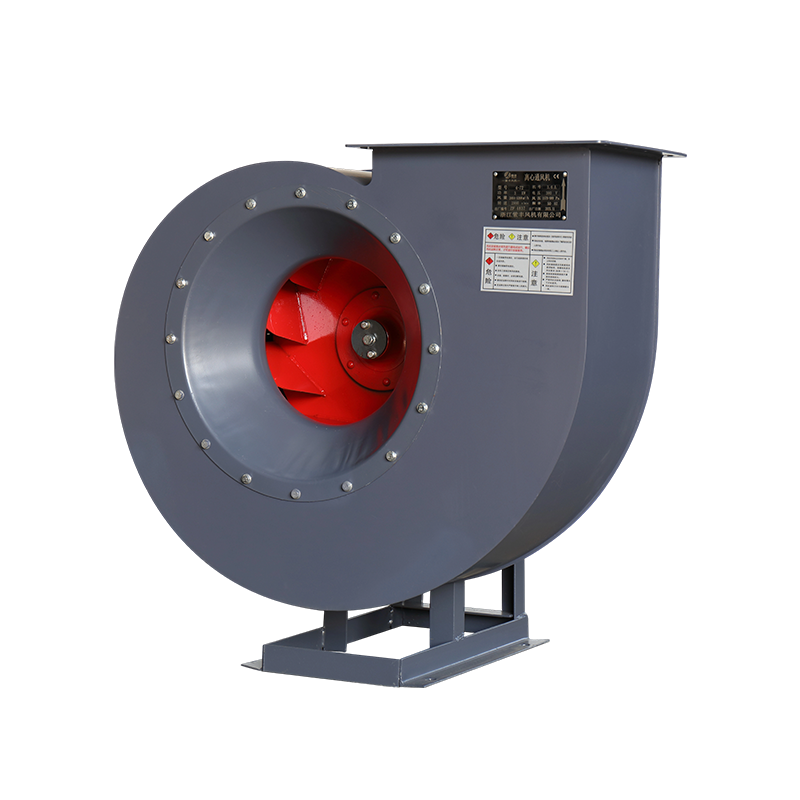
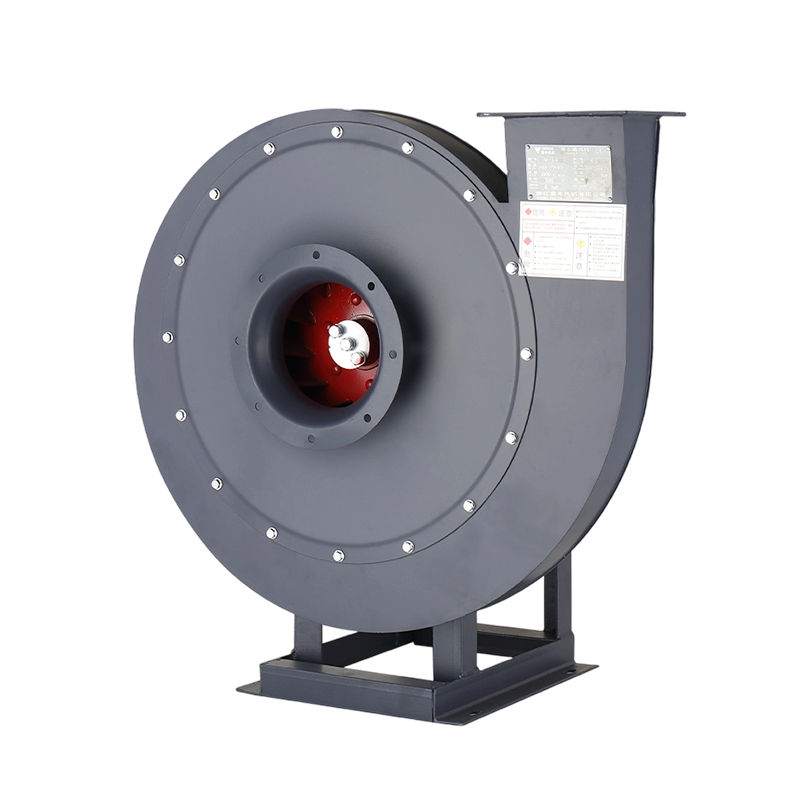
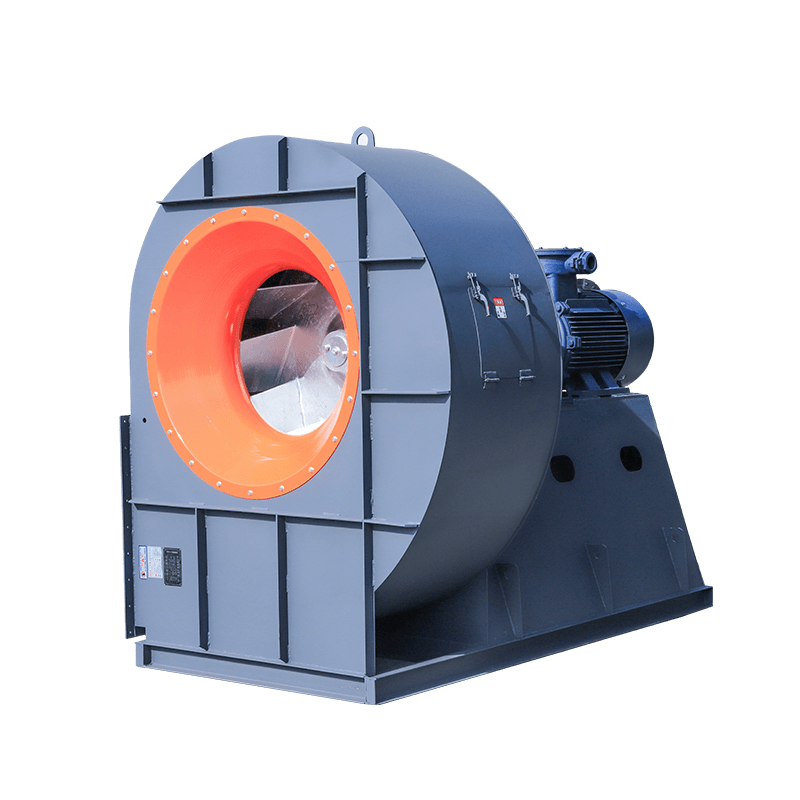
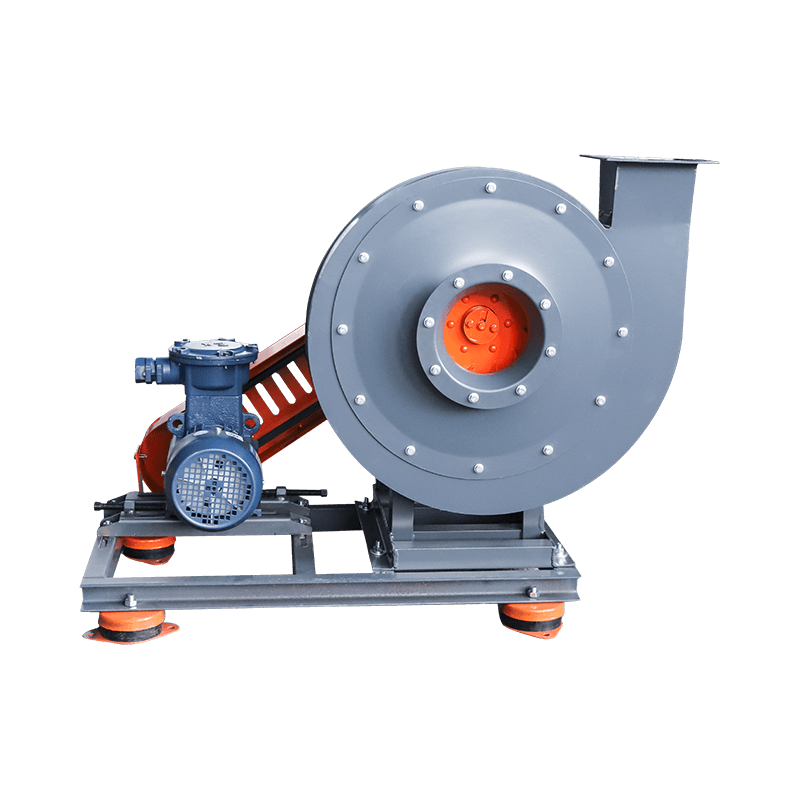
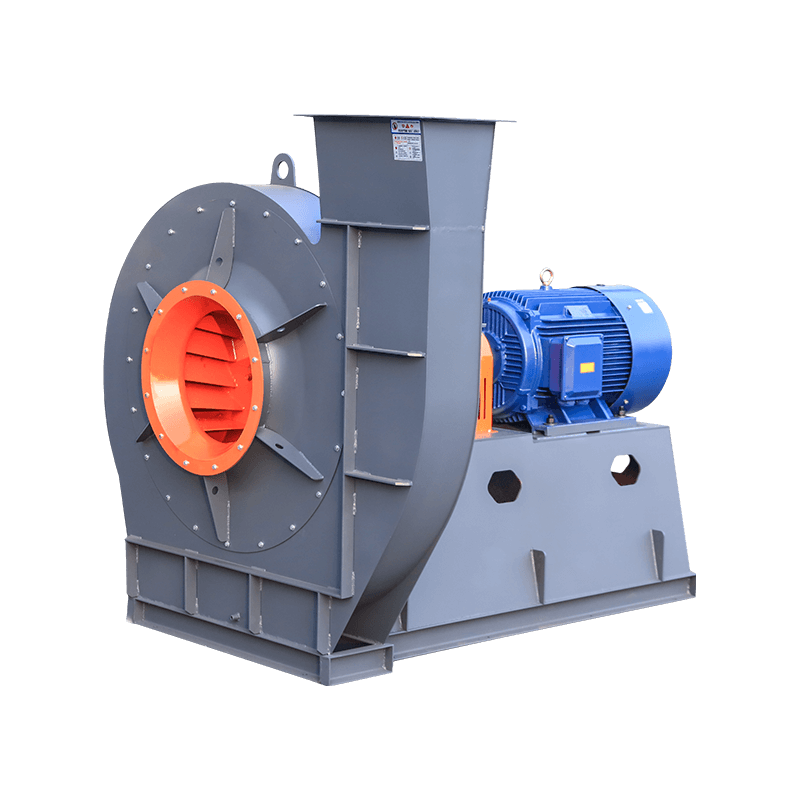
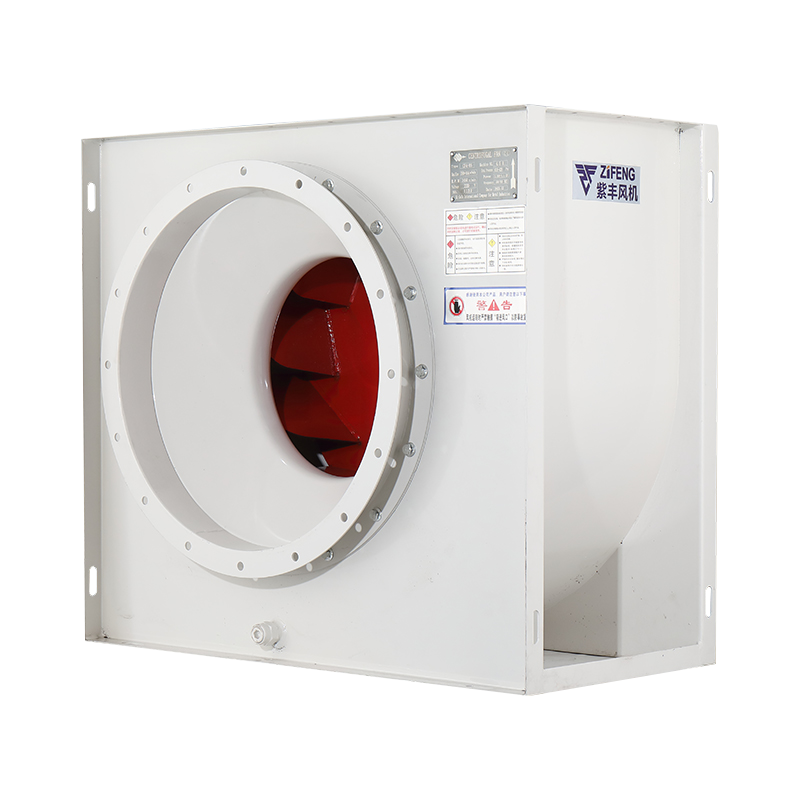
As a rough family guide: 4-72 covers general ventilation with high airflow at low to medium pressure; 9-19 is a high-pressure, lower-flow design for forced draft and material conveying; 9-26 delivers high pressure at higher flow than 9-19. Always confirm against the actual curve for the model and speed.
| Series | Typical duty | Common application |
|---|---|---|
| 4-72 (A / C / D) | High airflow, low–medium pressure | General factory ventilation, dust removal, air supply |
| 9-19 / 9-26 | High pressure, low–medium airflow | Boiler forced draft, material conveying, high-resistance systems |
| CF / DF | Compact, clean or warm air | Kitchen and commercial hood exhaust, small drying lines |
| Y / high-temperature ID fans | Sustained duty at 200–600 °C | Boilers, kilns, furnaces, heat-setting machines |
For belt-driven sets also add belt and bearing losses (about 3–5%). If the fan starts against a closed damper the starting torque is low; if it starts against full system resistance, specify a higher service factor or a soft starter / VFD.
Given: required airflow 6,000 m³/h; ductwork with 8 elbows, one cartridge filter (loaded), booth inlet; gas temperature 80 °C; plant altitude 500 m; clean-ish air with paint mist; power 380 V / 50 Hz.
Example values are illustrative; every project is confirmed against the actual fan curve and test data before we quote.
Airflow (m³/h or CFM), total static pressure or a description of your ductwork, gas temperature, gas composition and dust load, site altitude, and your power supply (voltage, phase, frequency). A photo of the old fan nameplate or the installation also helps a lot.
Yes. Measure the airflow and pressure on site if possible; otherwise give us the duct diameter, motor kW and rpm, and the application, and we can usually reconstruct the duty point. See our retrofit guide for the full method.
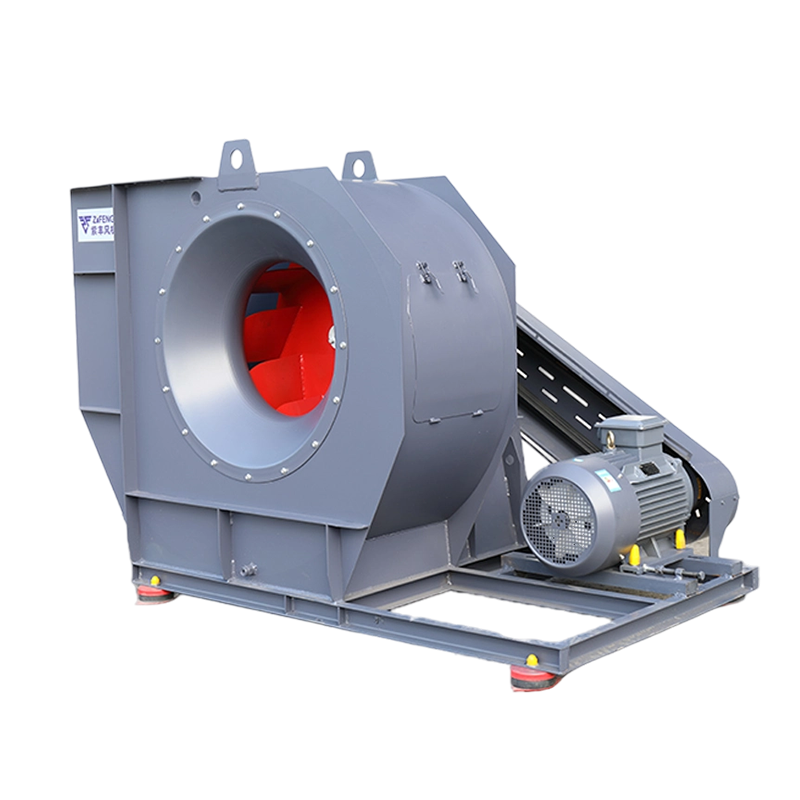
Direct drive is simpler, cheaper and needs less maintenance, but the fan speed is fixed by the motor. Belt drive lets you adjust speed to hit an unusual duty point and keeps the motor out of hot or dusty gas — preferred for high-temperature and heavy-dust duties.
For standard models, size and motor power dominate the price; for custom units, material (stainless steel, wear liners), temperature rating, explosion-proof construction and motor brand move the number much more. Send your parameters and we will quote FOB Ningbo with no guesswork.
Standard models usually ship in 7–15 days. Custom-built units typically take 15–30 days depending on material and motor. We accept small trial orders and support OEM/ODM with private labelling.
Copyrighte © Zhejiang Zifeng Fan Co., Ltd. All Rights Reserved.